English
 中文简体
中文简体Content
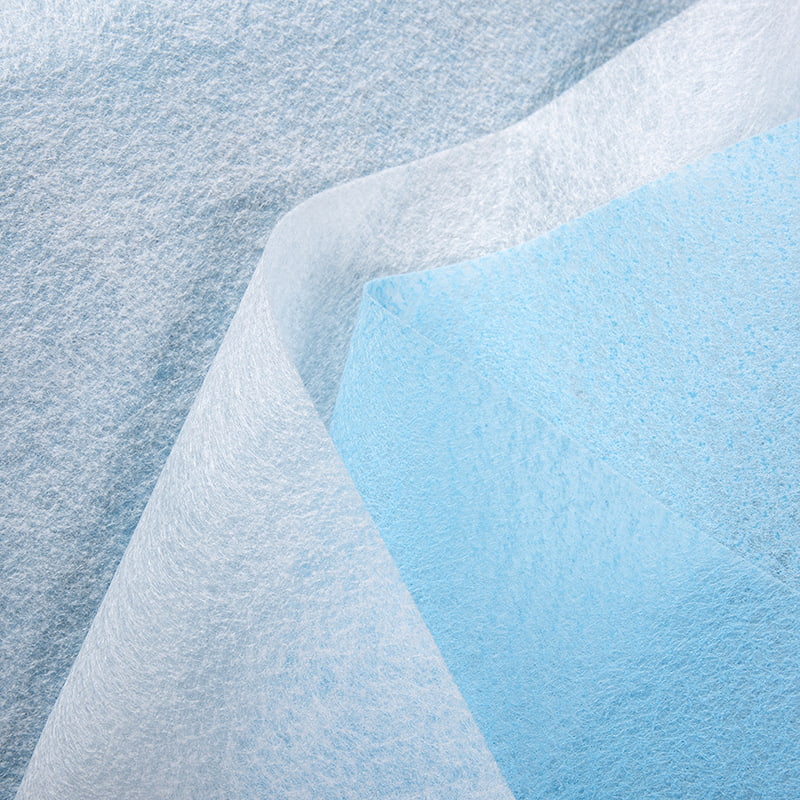
When a sourcing engineer asks whether a needle-punched non-woven composite material can replace a heavier laminated structure, the first answer is usually yes — the more relevant question is how the layers should be engineered. Needle-punched non-woven composites are not simply two fabrics glued together. They are designed material systems in which a mechanically entangled fiber base is combined with films, scrims, foam layers, or additional nonwoven plies to deliver properties that no single fabric can provide on its own.
What Is a Needle-Punched Non-Woven Composite Material?
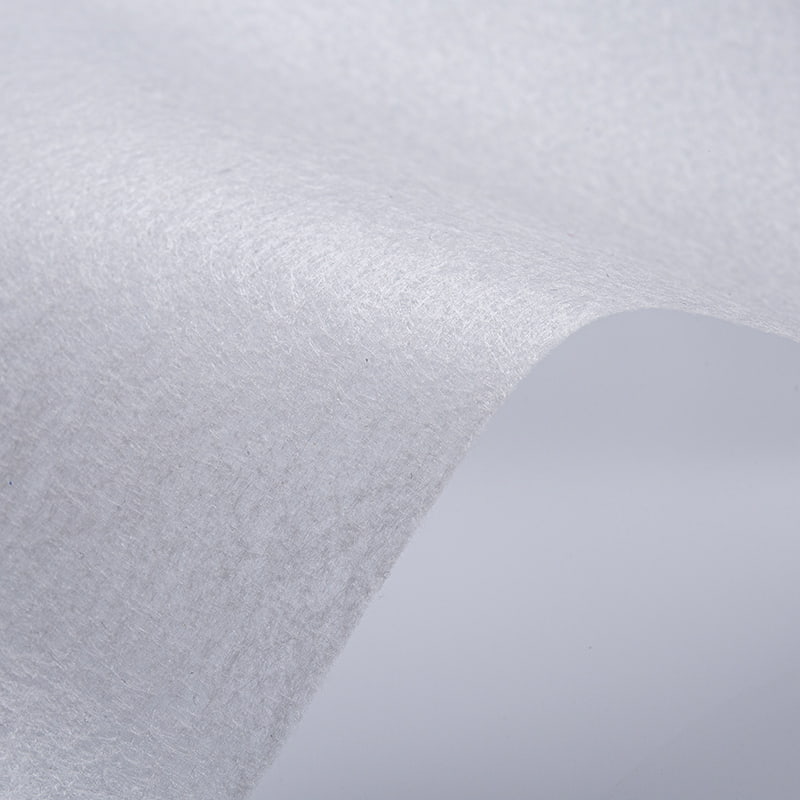
A needle-punched non-woven composite starts as a loose fiber web that is compressed and mechanically bonded by thousands of barbed needles moving vertically through the fiber mass. This creates a coherent, porous fabric structure. The composite stage adds at least one more functional layer — a reflective membrane, a woven reinforcement scrim, a breathable film, or a second nonwoven with different fiber fineness.
The practical implication for buyers is that one composite sheet can replace a multi-component assembly. A mattress pad, for instance, can combine a soft surface fleece, a dense needle-punched core, and a thin moisture barrier in a single production step. Furniture makers, automotive suppliers, and agricultural product brands use this integration to reduce assembly labor, lower total weight, and improve quality consistency across high-volume production runs.
How Composite Nonwovens Are Manufactured
Needle Punching: The Mechanical Bonding Foundation
Needle punching is the oldest and most versatile mechanical bonding method for nonwoven fabrics. The process feeds a carded or air-laid fiber web into a needle loom, where reciprocating boards drive barbed needles through the web thickness. Each needle carries fibers downward and sideways, creating vertical entanglement. Key process variables include needle gauge, barb depth, penetration depth, and punch density — typically 30 to 200 punches per square centimeter depending on the required stiffness, porosity, and tensile profile.
For composite materials, the needle-punch stage defines the base fabric’s mechanical personality: its tear resistance, elongation behavior, surface density, and through-thickness integrity. A well-bonded base layer prevents delamination later, even when the composite is subjected to bending, compression, or shear during molding and installation.
Lamination, Calendering, and Multi-Layer Construction
Once the base web is bonded, composite routes vary. A film can be applied by flame lamination or hot-melt adhesive web; a knitted or woven scrim can be embedded to boost dimensional stability; a second fiber layer can be needled directly onto the first to create a gradient structure with a fine face on one side and a lofty, cushioning face on the other.
Another advanced route is three-dimensional needle punching, where multiple fabric layers are joined by through-thickness fibers to form a thick, delamination-resistant preform. This technique, originally developed for aerospace composites, is now used in acoustic panels, insulation cores, and industrial padding where layer separation would compromise performance.
Key Properties That Drive Material Selection
When engineers evaluate needle-punched non-woven composite materials, they focus on a short list of measurable characteristics rather than generic quality claims. The table below summarizes typical specification ranges that procurement teams use as starting points for different application groups.
| Application Area | Typical Mass (g/m²) | Critical Performance |
|---|---|---|
| Geotextiles and drainage layers | 200–800 | Hydrostatic resistance, tear strength |
| Automotive interior trim | 150–600 | Molded shape retention, sound absorption |
| Industrial filtration media | 300–900 | Controlled pore size, chemical resistance |
| Furniture and mattress layering | 100–400 | Compression recovery, surface softness |
| Agricultural ground covers | 80–300 | UV resistance, water permeability |
- Mass per unit area is the first control parameter, with tighter tolerances (±5% or better) required for automotive and filtration components that feed into automated cutting lines.
- Thickness and compressibility determine how much gap-filling and cushioning the composite provides in seating, bedding, and acoustic panels.
- Tensile and tear strength are normally tested in both machine and cross directions because needle-punched fabrics are rarely fully isotropic.
- Air permeability and pore size become decisive in filtration and in breathable protective products where pressure drop must stay predictable.
- Delamination resistance is what separates a durable composite from a marginal one in demanding roles such as conveyor reinforcement and wheel-arch liners.
For fiber selection, polyester staple fiber remains the most common choice because it balances resilience, moisture resistance, and thermal stability. Polypropylene is preferred where chemical inertia and lower cost matter more than elevated temperature performance. Natural and recycled fibers are increasingly blended into composites, particularly in products seeking GRS certification or a reduced carbon footprint.
Application Landscape: Where Composite Versions Earn Their Keep
Furniture and Bedding Components
In upholstered furniture and mattresses, composite nonwovens appear as spring-bag protection fabric, sofa cool-cloth lining, bed-frame insulation pads, and mattress underlays. The composite advantage is structural: one material can provide both reinforcement and a finished surface, eliminating a separate lamination step in the furniture factory. Anti-slip, water-repellent, and mold-resistant finishes are often added to the composite to satisfy specific retail channels. Furniture buyers evaluating upholstery-grade fabrics can reference this easy-clean decorative chair fabric guide to understand how surface fiber density affects cleanability and abrasion performance.
Automotive Interior Systems
Automotive manufacturers select composite nonwovens for headliners, trunk cargo liners, seat clip felts, wheel-arch protection, and floor carpet systems. The material’s ability to be die-cut, molded, and backed with film helps vehicle programs hit mass reduction targets while controlling interior noise. Flammability ratings, fogging behavior, and odor requirements are part of the specification package. For flooring applications specifically, this stain-resistant nonwoven automotive carpet guide examines how fiber finish and backing selection affect long-term appearance retention.
Geotechnical and Construction Layers
In foundation drainage, green roofs, and asphalt overlay systems, needle-punched composites provide separation, filtration, and reinforcement in one installation. A common construction is a dense needle-punched fabric bonded to a drainage mesh or a reinforcing carrier. When the requirement is thermal performance as well as mechanical strength, a composite panel core made from needle-punched nonwoven, laminated to a facing layer, delivers predictable insulation values while resisting compression from structural loads. This thermal-insulation composite panel core needle-punched nonwoven is typically specified with explicit density, thickness tolerance, and facing type to match the building project’s thermal and structural targets.
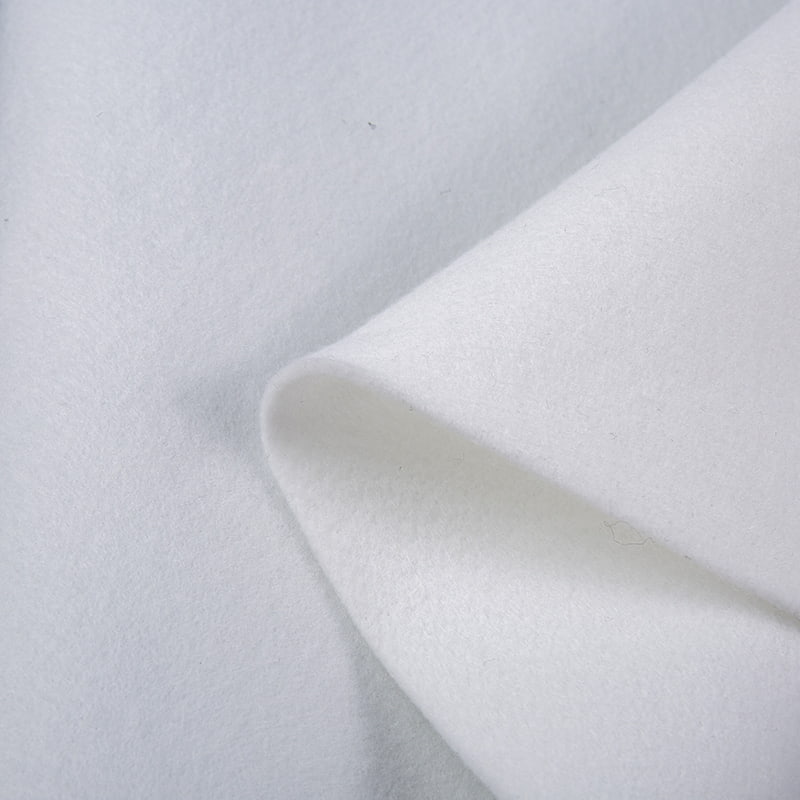 Thermal Insulation Composite Panel Core Needle-Punched Nonwoven Material SupplieAs Thermal Insulation Composite Panel Core Needle-Punched Nonwoven Material Suppliers and Factory in China, Changyuan offer Wholesale The...View Product →
Agricultural and Horticultural Covers
Weed-control ground covers, crop frost protection sheets, and planting bags depend on the balance between water permeability and mechanical durability. A composite construction can combine a UV-stabilized top layer with a permeable fiber base, allowing the same fabric to shed water efficiently while preventing weed penetration from below. In greenhouse operations, the challenge is different: light diffusion and heat insulation become priorities. A heat-insulating greenhouse shading composite with a dark outer face and a reflective inner layer reduces daily temperature swings while allowing moisture vapor to escape. Greenhouse suppliers often request this heat-insulating greenhouse shading needle-punched nonwoven in long roll lengths with a documented shade coefficient and uniform thickness profile.
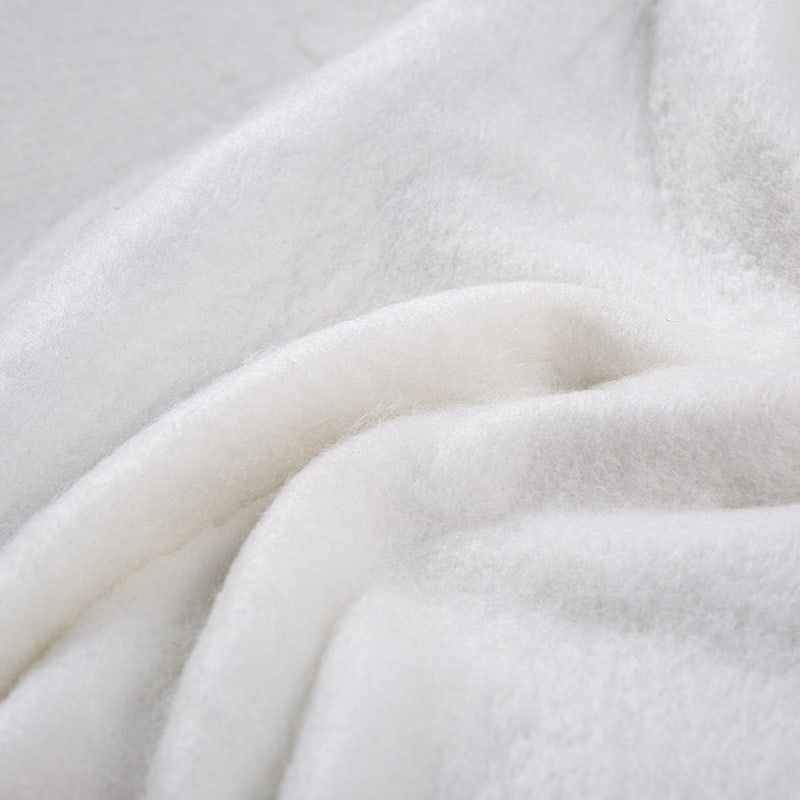 Heat-Insulating Greenhouse Shading Needle-Punched Nonwoven Suppliers, Factory - As Heat-Insulating Greenhouse Shading Needle-Punched Nonwoven Suppliers and Factory in China, Changyuan offer Wholesale Heat-Insulating G...View Product →
Filtration and Industrial Reinforcement
Industrial filtration is one of the most technically demanding applications for needle-punched nonwovens. The entangled fiber structure creates a tortuous path for particles, giving high dust-holding capacity and stable pressure drop. When combined with a woven scrim or a finer filtration layer, the composite gains burst strength without sacrificing airflow. Conveyor systems use a different type of composite: a high-abrasion fabric laminated or needled onto belt surfaces to extend service life in package handling and food processing equipment. Selection depends on edge tear strength, elongation at break, and surface friction under load. This abrasion-resistant conveyor belt reinforcement needle-punched nonwoven is specified when the belt operates under continuous sliding friction and requires a replaceable wear layer rather than a full belt replacement.
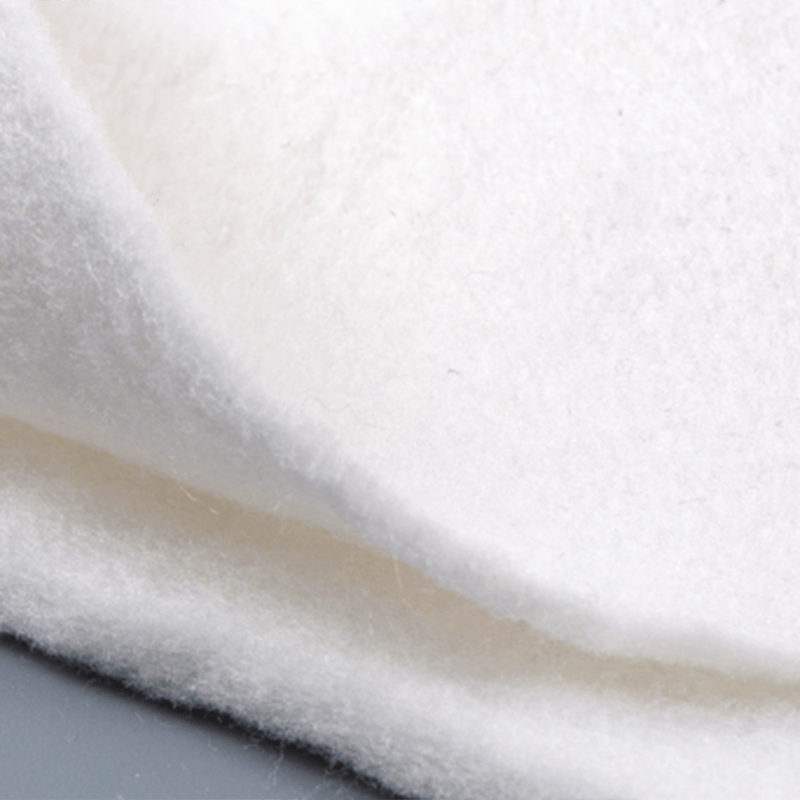 Abrasion Resistance Conveyor Belt Reinforcement Needle-Punched Nonwoven Fabric SAs Abrasion Resistance Conveyor Belt Reinforcement Needle-Punched Nonwoven Fabric Suppliers and Factory in China, Changyuan offer Wholesa...View Product →
Specialty Segments: Medical, Cleaning, and Flooring
Medical composites combine needle-punched felt with films or additional nonwoven layers for casting, wound dressing, and packaging barrier functions. Cleaning and wiping products use composite constructions to pair absorbent fiber blends with a tougher exterior surface that resists shredding in wet use. Flooring is another high-volume segment: jacquard nonwoven carpets, event carpets, and carpet tiles often incorporate composite backings for anti-slip stability, dimensional hold, and moisture resistance. For architects and facility teams comparing decorative flooring systems, the jacquard nonwoven carpet construction overview outlines how face patterns interact with backing layers to affect installation and service life.
Sourcing a Composite Nonwoven That Won’t Fail in Production
The best composite design is worthless if the production material drifts from specification. Therefore, sourcing should begin with clear, measurable requirements and a supplier that can demonstrate control over the full process chain.
Define Measurable Tolerances Before Sampling
Do not specify only the nominal grammage. Request tolerance bands for mass per unit area, thickness under a defined pressure foot, tensile strength in both directions, and air permeability. If the composite will be die-cut or molded, include edge tear strength and compression set data. These parameters determine whether the material runs smoothly on automated lines and whether the finished component holds its shape over time.
Check Certifications and Recycled Content
Certifications reduce compliance risk in regulated industries. GRS certification provides traceability for recycled fiber content, which is important for brands with circular economy commitments. OEKO-TEX certification confirms the material has been tested for harmful substances and is safe for prolonged skin contact. Both certifications are also useful checkpoints when verifying that a supplier’s quality claims are audited by an independent body.
Confirm Custom Finishing and Supply Chain Capacity
Many composite nonwovens need additional conversion steps such as flame retardant treatment, anti-slip coating, embossing, printing, quilting, or self-adhesive backing. Ask the supplier whether these finishing operations are performed in-house or subcontracted, because multiple outsourced steps increase lead time and variability. A vertically integrated manufacturer with its own needle-punching lines, lamination equipment, and finishing units can respond faster to specification changes. Geographic proximity to a major port also matters for export programs where freight reliability is as critical as piece price.
Final Recommendations
Start with the function, not the fabric. Define the application’s critical performance — whether that is separation efficiency, acoustic absorption, compression recovery, or delamination resistance — and work backward to the construction. Then validate the specification with a manufacturer that can produce consistent rolls, provide auditable certifications, and deliver within the project timeline.

 Tel: +86 15700112297
  WhatApp: +86 15700112297
  E-mail:
  Yinziqiao Village, Shicong Town, Nanxun District, Huzhou City, Zhejiang Province, China