English
 中文简体
中文简体Content
Vehicle interiors take more abuse than most flooring environments. Mud, spilled drinks, pet hair, road grit tracked in on shoes — the floor of a daily-use vehicle faces constant contamination and mechanical stress. Standard automotive carpet often handles the first few years reasonably well before staining, fiber compression, and odor retention become persistent problems. Stain-resistant non-woven automotive carpet addresses these failure modes at the material level, not as an afterthought surface coating.
Built from premium polyester non-woven fibers with an integrated liquid-repellent surface treatment, this flooring category is engineered to keep vehicle interiors cleaner, longer — with far less maintenance effort than conventional carpet alternatives.
How Stain Resistance Is Built In
Most stain-resistant claims in flooring are based on topical treatments applied after the product is finished. These coatings degrade with cleaning, UV exposure, and foot traffic, which means the stain resistance diminishes in the environments where it matters most.
The stain-resistant treatment used in non-woven automotive carpet works differently. Advanced liquid-repellent technology is applied at the fiber treatment stage, creating a surface barrier that causes liquids to bead and run off rather than absorbing into the fiber structure. Coffee, mud, oil residue, and common vehicle-interior spills are prevented from penetrating the material, making them easy to wipe away before they set.
This approach to stain resistance is durable by design. Because the repellent treatment bonds with the polyester fiber surface rather than sitting on top of it, it maintains effectiveness through repeated cleaning cycles and sustained foot traffic — the conditions a working vehicle floor actually experiences.
For fleet operators and vehicle owners seeking automotive needle-punch nonwoven fabrics built for interior durability, this distinction between topical and treatment-integrated stain resistance is worth understanding before specifying flooring material.
Material Construction and Performance Properties
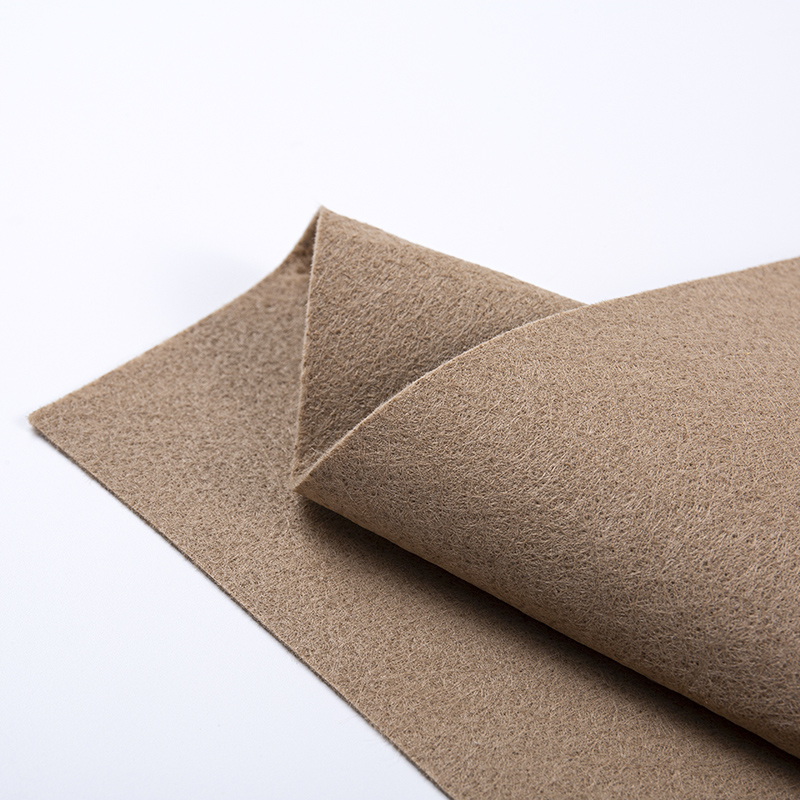
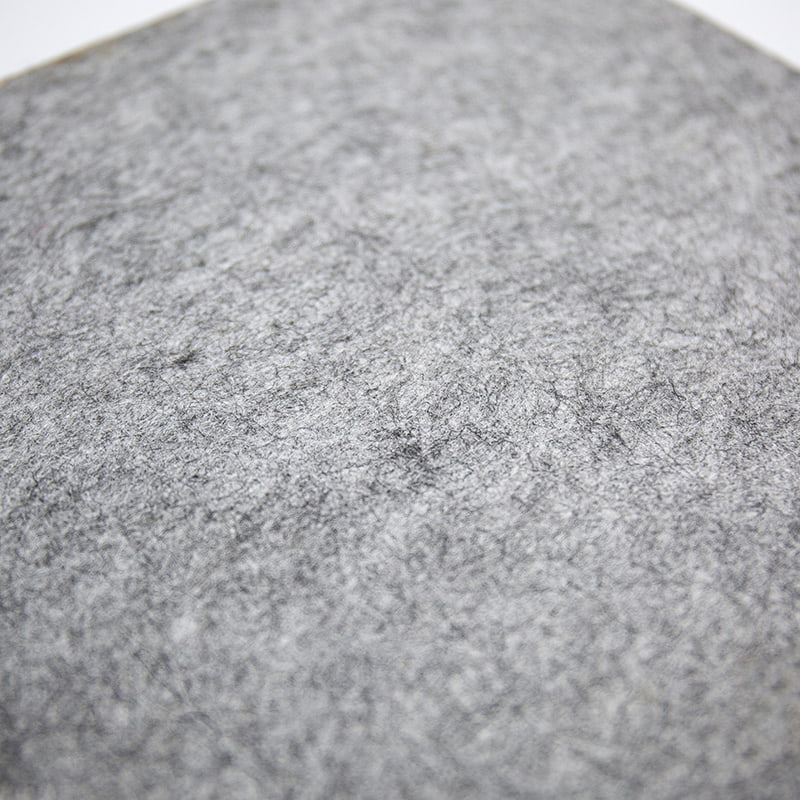
Stain-resistant non-woven automotive carpet is manufactured through a needle-punch process in which barbed needles mechanically entangle polyester staple fibers into a dense, cohesive sheet. No yarn conversion is required — fibers bond directly into a uniform structure, which gives the finished carpet several properties that matter specifically in automotive applications.
Moisture resistance is one of the primary structural advantages. Polyester fibers are hydrophobic by nature, meaning the material does not absorb water into its base structure. This prevents the sub-surface moisture retention that causes odor and mold in carpets that rely on absorbent backing materials.
Abrasion resistance is equally important for floor applications. The entangled fiber structure distributes compressive load across the surface rather than concentrating wear in high-contact zones. Driver and passenger footwells — the most heavily trafficked areas — maintain their appearance and structural integrity over extended service periods.
Dimensional stability ensures the carpet holds its shape under heat, humidity cycling, and the varied mechanical loads of a vehicle environment. Non-woven construction does not stretch or deform the way woven backings can under thermal stress, which is relevant for vehicles operating across wide temperature ranges.
Soft feel and comfort underfoot round out the performance profile. Despite its density and durability, the polyester fiber structure produces a surface that is comfortable for driver and passenger contact — an important consideration for long-distance and commercial vehicle applications where occupants spend extended time in the vehicle.
Maintenance Advantages Over Conventional Automotive Carpet
Maintenance burden is one of the most practical differentiators between non-woven automotive carpet and conventional tufted or woven alternatives. Tufted carpet traps dirt and liquid in the pile, requiring extraction cleaning or professional detailing to restore appearance after significant soiling. Non-woven automotive carpet with stain-resistant treatment eliminates most of that complexity.
Routine maintenance is reduced to two steps: vacuuming for dry debris and spot cleaning for liquid spills. Because the liquid-repellent surface treatment prevents most spills from bonding with the fiber, spot cleaning with a damp cloth or standard interior cleaning solution is typically sufficient. There is no need for extraction equipment, extended drying time, or specialist cleaning products.
For commercial vehicle operators — taxi fleets, rideshare vehicles, delivery vehicles, rental cars — this reduced maintenance cycle has direct operational value. Less downtime for interior cleaning, lower detailing costs, and a consistently presentable interior across the service life of the vehicle are outcomes that translate into measurable operating efficiency.
The same benefits apply to passenger vehicle owners who want interior flooring that stays presentable without frequent intervention. A vehicle used for family transport, outdoor activities, or pet travel presents conditions that quickly overwhelm standard carpet — non-woven stain-resistant flooring is engineered specifically for those use patterns.
Vehicle Compatibility and Application Scope
Stain-resistant non-woven automotive carpet is suitable across a wide range of vehicle types and installation contexts.
- Passenger vehicles including sedans, hatchbacks, and crossovers, where interior aesthetics and ease of maintenance are primary buyer priorities.
- SUVs and trucks, where the cargo areas and rear passenger sections face the most demanding contamination conditions — mud, outdoor gear, work equipment.
- Commercial vehicles including vans, light trucks, and fleet vehicles, where flooring durability and low maintenance cost are operational requirements rather than preferences.
- OEM replacement applications, where the original factory carpet has worn beyond acceptable condition and a direct replacement with improved performance characteristics is required.
- Aftermarket customization, where vehicle owners or converters are specifying interior materials for upgraded appearance, improved durability, or specific color matching.
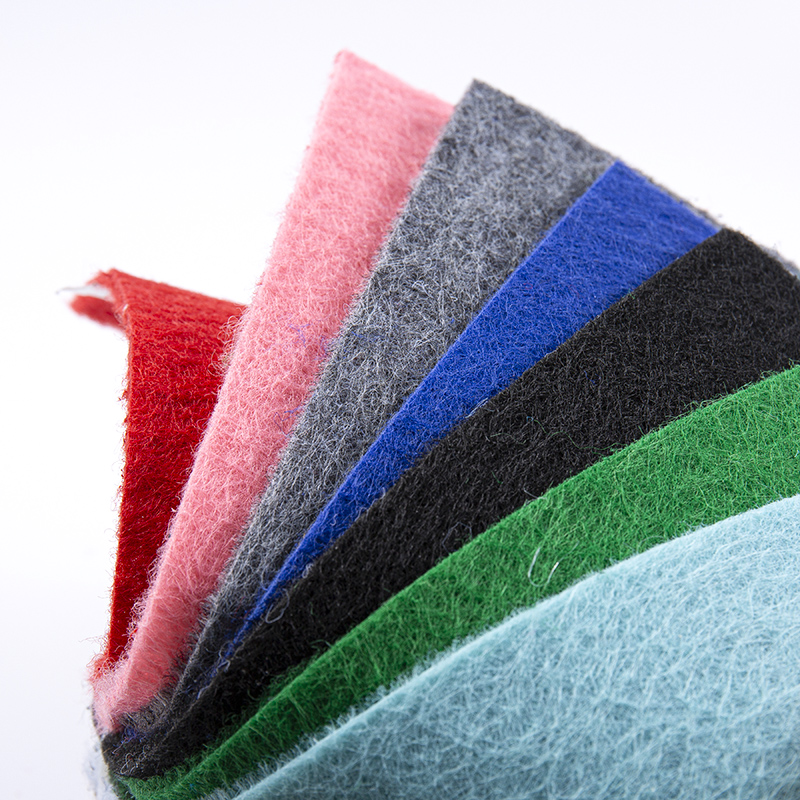
Custom fit options allow the carpet to be produced to match specific vehicle floor profiles, including transmission tunnel cutouts, seat rail positions, and wheel arch contours. Various color options support integration with existing interior trim across vehicle makes and model years.
Specification Overview
Buyers and specifiers evaluating stain-resistant non-woven automotive carpet for procurement or installation should reference the following typical parameter ranges:
| Parameter | Typical Range |
|---|---|
| Base Material | 100% polyester staple fiber |
| Construction Method | Needle-punch nonwoven |
| Pile Weight | 300 - 600 g/m2 |
| Surface Treatment | Liquid-repellent stain-resistant finish |
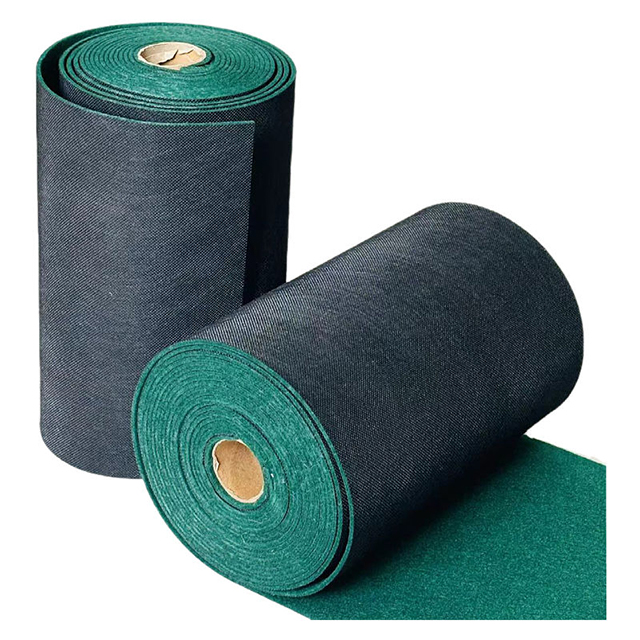
| Backing Options | Anti-slip PVC, TPR, plain nonwoven |
| Color Options | Custom color matching available |
| Fit Options | Universal roll or custom die-cut profile |
| Applications | OEM replacement, aftermarket, fleet |
Custom fit production requires vehicle-specific floor templates or CAD profiles. Manufacturers with in-house die-cutting and fabrication capability can produce matched sets for specific vehicle makes and models at volume.
Selecting the Right Supplier
For OEM replacement buyers and aftermarket distributors, supplier selection for automotive carpet involves several practical factors beyond unit price.
Production consistency matters significantly when sourcing for multi-vehicle fleets or distribution channels with quality expectations. Needle-punch nonwoven manufacturing supports batch-to-batch consistency in fiber density, weight, and surface treatment application — but buyers should confirm that the manufacturer operates with documented quality control protocols covering these parameters.
Customization capability is a second consideration. Color matching to specific vehicle interior trim codes, custom sizing to OEM floor profiles, and backing material selection all require a manufacturer with flexible production tooling and technical support capacity. Not all nonwoven carpet suppliers offer the full range of customization options that automotive applications require.
Lead time and minimum order quantity should be evaluated against the buyer's distribution model. Roll goods for aftermarket installation typically have different logistics requirements than pre-cut OEM replacement sets produced to specific vehicle profiles.
For buyers seeking a vertically integrated nonwoven manufacturer with automotive-specific production capability, Huzhou Changyuan Nonwoven Co., Ltd. produces needle-punch nonwoven fabrics for automotive interiors alongside carpet, furniture, filtration, and composite nonwoven product lines — offering specification support across the range of vehicle interior flooring requirements.
Conclusion
Stain-resistant non-woven automotive carpet brings together the structural durability of needle-punch polyester construction with a purpose-built liquid-repellent surface treatment to produce flooring that handles the real conditions of vehicle use. Moisture resistance, abrasion resistance, dimensional stability, and easy maintenance are properties that emerge from the material construction rather than marketing specification — and they hold up in daily-use passenger vehicles, commercial fleets, and demanding outdoor-activity vehicle applications alike.
For OEM replacement buyers, aftermarket distributors, and fleet operators evaluating automotive flooring, non-woven stain-resistant carpet offers a technically grounded upgrade over conventional alternatives, particularly where interior appearance, hygiene, and maintenance cost over the vehicle's service life are part of the procurement calculus.
 Tel: +86 15700112297
  WhatApp: +86 15700112297
  E-mail:
  Yinziqiao Village, Shicong Town, Nanxun District, Huzhou City, Zhejiang Province, China