English
 中文简体
中文简体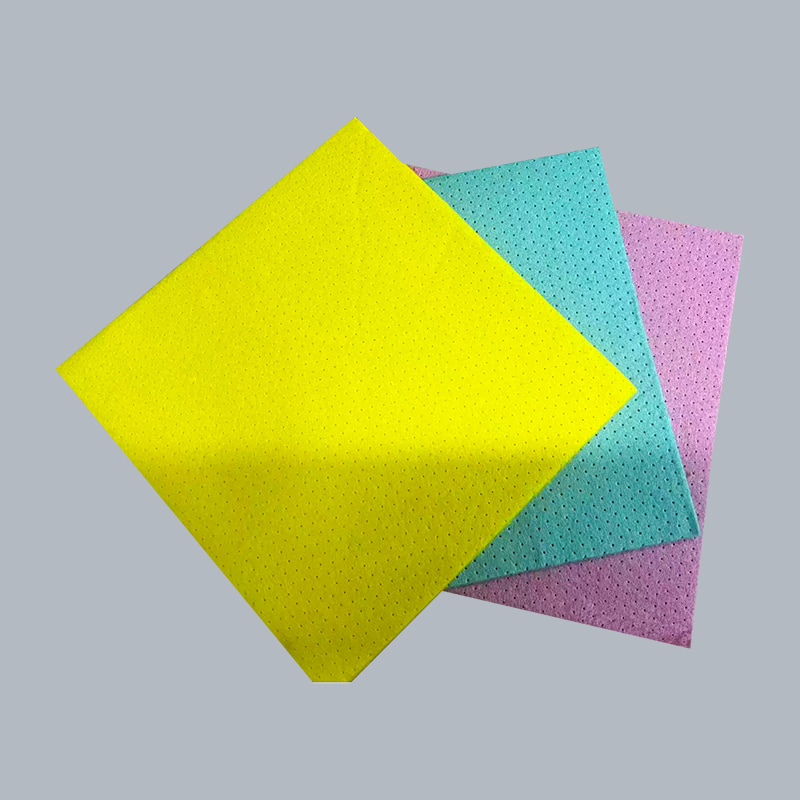

Industry Knowledge
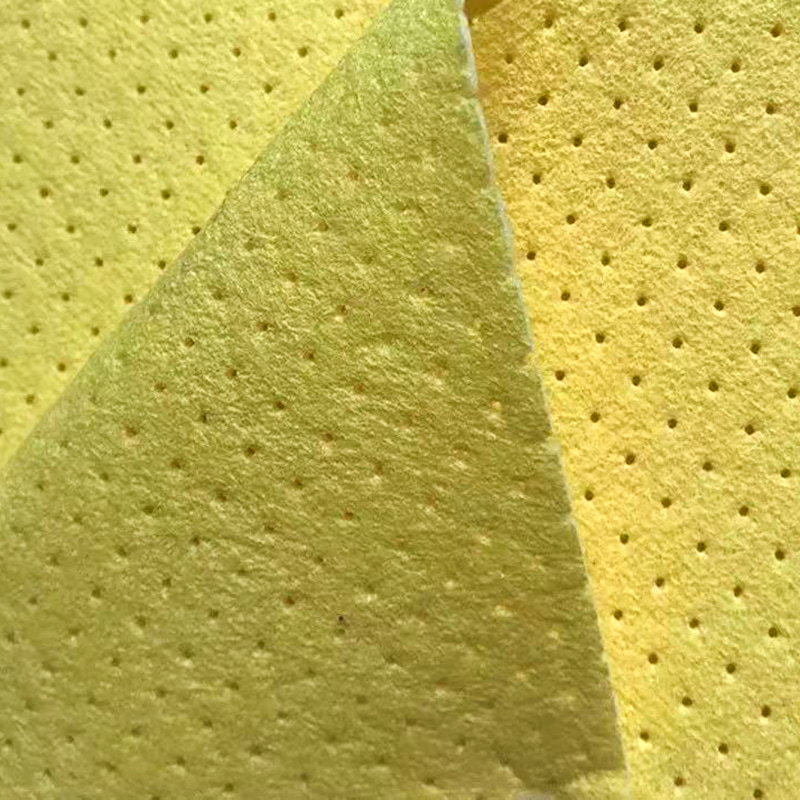
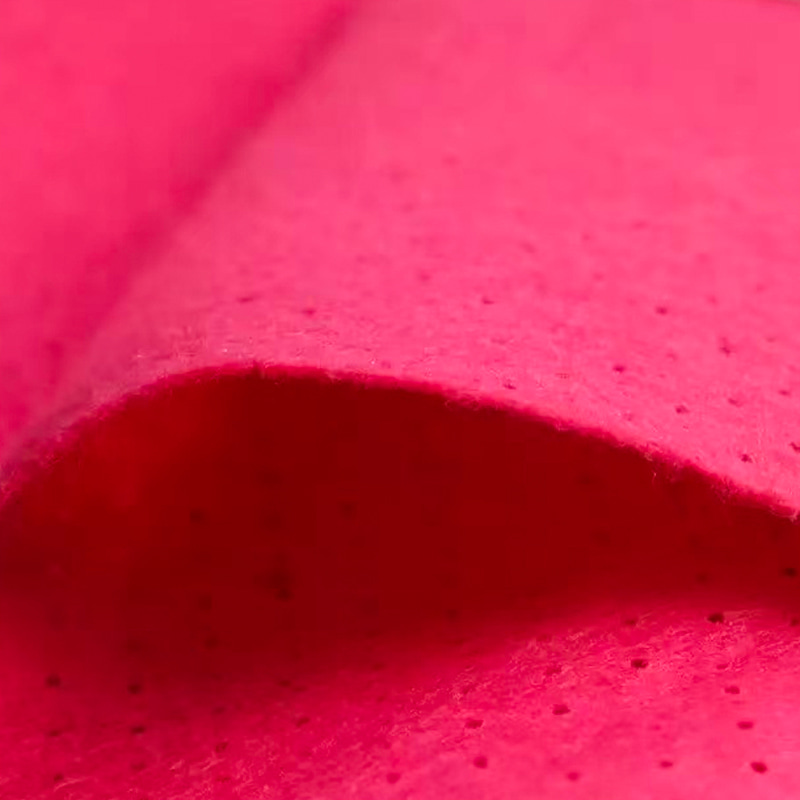
Engineering Perforations in Needle-Punched Non-Woven Fabric With Holes
The creation of Needle-Punched Non-Woven Fabric With Holes involves precise mechanical or thermal perforation processes that fundamentally alter the material's structural dynamics. Unlike traditional solid nonwovens, introducing controlled apertures requires careful consideration of fiber orientation and needle density to prevent tear propagation along the perforation lines. Advanced manufacturing utilizes laser ablation or precision mechanical punching to create clean, burr-free holes that maintain the tensile integrity of the surrounding fibrous matrix. This structural optimization is critical when the material is subjected to high-stress environments, ensuring that the presence of voids does not compromise the overall load-bearing capacity of the geotextile or industrial lining.
Optimizing Fluid Dynamics and Filtration Efficiency
In filtration and drainage applications, the strategic placement of voids in Needle-Punched Non-Woven Fabric With Holes significantly enhances fluid dynamics and flow rates. The perforations act as primary channels for rapid liquid or gas transmission, while the surrounding needle-punched fibrous web serves as a secondary micro-filtration layer. This dual-mechanism approach allows for the efficient separation of coarse particulates while maintaining high permeability. For medical-grade and industrial filtration uses, controlling the exact diameter and spatial distribution of these holes is essential to achieve the desired balance between pressure drop and particle capture efficiency, preventing premature clogging and extending the service life of the filter media.
Acoustic Dampening and Thermal Management Applications
Beyond fluid handling, perforated nonwovens play a pivotal role in acoustic and thermal management, particularly in automotive interior fabrics. The holes introduce Helmholtz resonance cavities that trap and dissipate sound waves across specific frequency ranges, significantly reducing cabin noise. Furthermore, the increased surface area and air circulation facilitated by the perforations improve thermal dissipation, making the material highly effective for heat shielding applications where solid fabrics would trap excessive heat.
Comprehensive Quality Control and Testing Parameters
Ensuring the reliability of perforated materials requires rigorous testing protocols that go beyond standard nonwoven evaluations. Manufacturers must assess both the macro-properties of the holes and the micro-properties of the fibrous web to guarantee performance in demanding applications.
- Air Permeability: Measures the volumetric flow rate of air through the perforations and the fibrous matrix, indicating the material's breathability and filtration capacity.
- Tear Strength: Evaluates the resistance to tear propagation, specifically monitoring how the material behaves when a tear initiates at the edge of a perforation.
- Dimensional Stability: Assesses the fabric's ability to maintain its shape and hole geometry under varying thermal and mechanical stresses during end-use.
- Bursting Strength: Determines the maximum pressure the material can withstand before rupturing, ensuring the structural integrity of the web between the holes.
Sustainable Manufacturing and Global Supply Chain Excellence
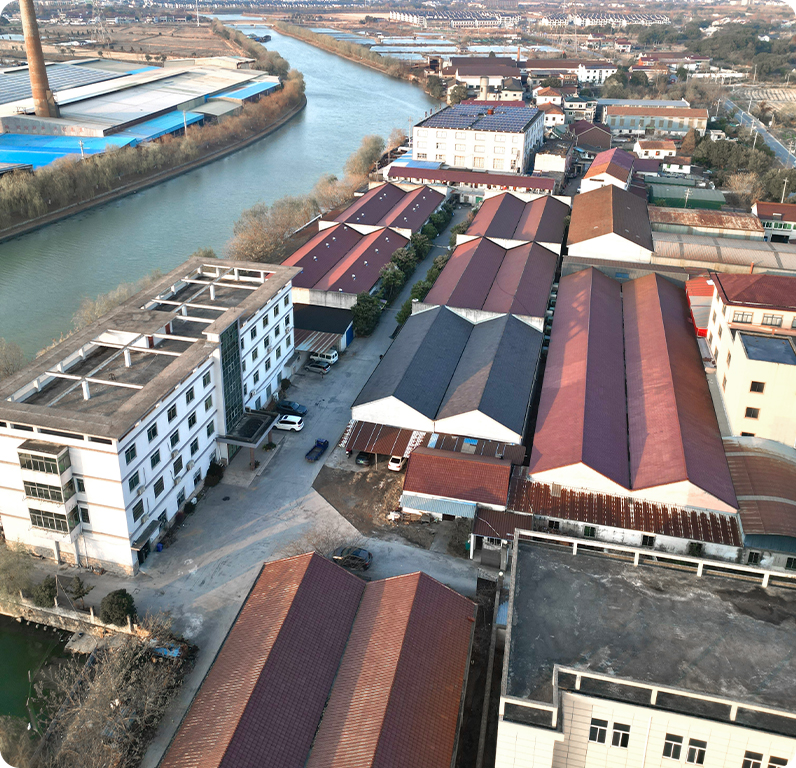
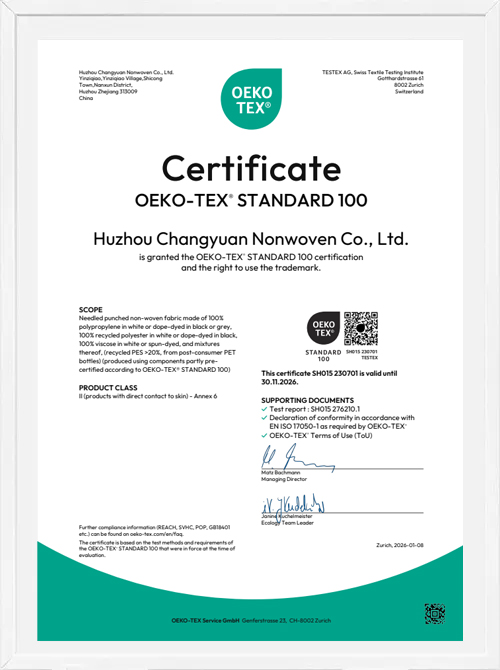
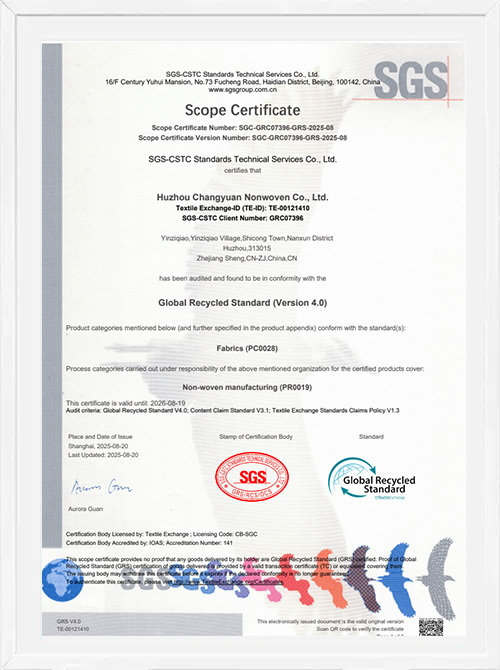
Huzhou Changyuan Nonwoven Co., Ltd. is situated in Zhejiang Province, with close proximity to Shanghai Port—an advantage that ensures efficient cargo delivery. We specialize in the research, development, production and marketing of high-quality needle-punched nonwovens. Our products boast a broad application scope, covering sofa/mattress linings, carpets, automotive interior fabrics, geotextiles, and cleaning products. They also include medical-grade nonwovens, and are further suitable for filtration, agricultural uses, and beyond. Our materials have earned GRS(Global Recycled Standard) and OEKO-TEX® certifications, upholding quality and sustainability. We warmly welcome domestic and foreign partners for win-win collaboration.
| Application Sector | Primary Function of Perforations | Key Performance Metric |
|---|---|---|
| Geotextiles & Drainage | Rapid fluid transmission and soil separation | In-plane flow rate and clogging resistance |
| Automotive Interiors | Acoustic dampening and thermal ventilation | Sound absorption coefficient and air permeability |
| Medical & Filtration | Controlled particulate capture and pressure equalization | Pore size distribution and bubble point pressure |
 Tel: +86 15700112297
  WhatApp: +86 15700112297
  E-mail:
  Yinziqiao Village, Shicong Town, Nanxun District, Huzhou City, Zhejiang Province, China