English
 中文简体
Content
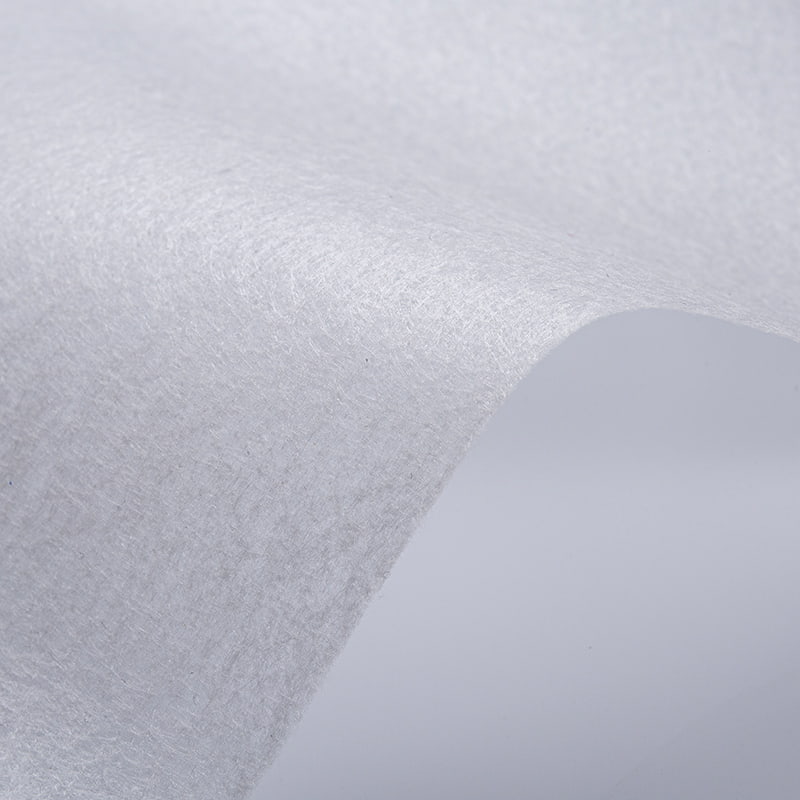
Needle punched nonwoven fabric is a mechanically bonded textile produced by entangling fibers with barbed needles. Compared with chemically bonded or thermally bonded nonwovens, the mechanical entanglement produces a fabric that is harder to tear at the same weight, more breathable, and more resistant to separation under repeated flexing. That combination explains its presence in mattress padding, automotive carpets, filter bags, geotextiles, and everyday cleaning cloths.
The manufacturing process starts with fiber preparation, then carding to align the fibers, cross-lapping or air-laying to build a batt, and finally needling to lock the fibers together. The result is a sheet that can be supplied as rolls, cut pieces, or die-cut parts. Before you compare prices, it is worth checking which fiber type and needling parameters were used, because they control both short-term performance and long-term durability. Different nonwoven technologies produce very different structures. Spunbond fabrics are made by extruding continuous filaments, while spunlace uses high-pressure water jets to tangle short fibers. Each has strengths, but needle punching remains the most cost-efficient route for thick, high-loft, and mechanically robust applications. If you are new to nonwovens, our overview of the different uses of nonwoven fabric types helps you distinguish which process belongs to which end use.
How Needle Punching Works
We can summarize the principle in one sentence: barbed needles repeatedly penetrate a fibrous batt and drag clusters of fibers from the surface toward the interior. The fibers become mechanically interlocked, producing a coherent fabric without the need for high temperatures or chemical binders.
Needle density, needle depth, and the pattern of the needle board are the variables that matter most. A low density, such as 30 punches per square centimeter, produces a fluffy, lofty material. A high density, above 300 punches per square centimeter, produces a stiff, compact sheet that resembles cardboard in some extreme cases. Most commercial products sit between 80-1500 g/m2, and from 1 to 10 mm thick.
The choice of needle gauge and barb shape determines whether the fabric feels soft or hard. Fine needles with small barbs transfer less fiber per stroke and give a smoother surface. Coarse needles with large barbs move more fiber and create more internal bonding and a rougher surface. Suppliers often adjust these parameters in response to the required tensile strength, elongation, and compression recovery.
Key Performance Specifications You Should Check
When you receive a sample of needle punched nonwoven fabric, you need a common language to compare offers. The table below lists the properties that appear on almost every industrial datasheet. It is not a complete list, but it covers the values that most often decide whether a fabric will work in your assembly line.
| Property | Typical range | Why it matters |
|---|---|---|
| Weight | 80-2000 g/m2 | Drives thickness, cost, and coverage |
| Thickness | 1-10 mm | Affects cushioning and insulation |
| Tensile strength (MD/CD) | 50-600 N/5cm | Indicates handling and structural resistance |
| Elongation at break | 30-120% | Affects conformability under stress |
| Air permeability | 200-3000 L/m2/s | Relevant for filtration and breathability |
| Surface finish | Smooth, felted, patterned | Affects friction and appearance |
The relationship between these properties is often more informative than the individual numbers. For example, two fabrics with the same weight can have completely different thickness if one is needle punched lightly and the other heavily. A lighter needling gives higher loft and better sound absorption but lower tensile strength. A heavier needling increases stiffness and dimensional stability but reduces softness and air permeability.
Tolerances are equally important. A standard weight tolerance for needle punched fabric is often +/-5% to +/-7%, and thickness tolerance may be +/-10%. For a mattress underlay or filter bag, thickness variation changes performance significantly. Ask your supplier which parameters they actually measure and whether they can tighten tolerance at a small cost premium.
Applications Across Industries
Furniture and Bedding
Furniture and bedding manufacturers use needle punched fabric as mattress underlays, sofa linings, spring bags, and seat cushion wraps. The main requirements are softness, breathability, and compression recovery. A low-allergen polyester fabric with adequate tensile strength prevents premature failure under daily stress.
 Hypoallergenic Needle-Punched Nonwoven Mattress Underlay for Healthy SleepThis durable, breathable mattress underlay resists allergens and moisture, making it a practical choice for bedding applications that require softness and compression recovery.View Product →
Automotive
Automotive interior parts such as headliners, trunk liners, wheel arch protectors, and carpet backings use needle punched fabric because it can be molded, die-cut, and laminated without losing integrity. The mechanical entanglement gives the panel acoustic damping while keeping weight low. For trunk cargo liners, tear resistance matters most, while carpets need stain resistance and abrasion resistance.
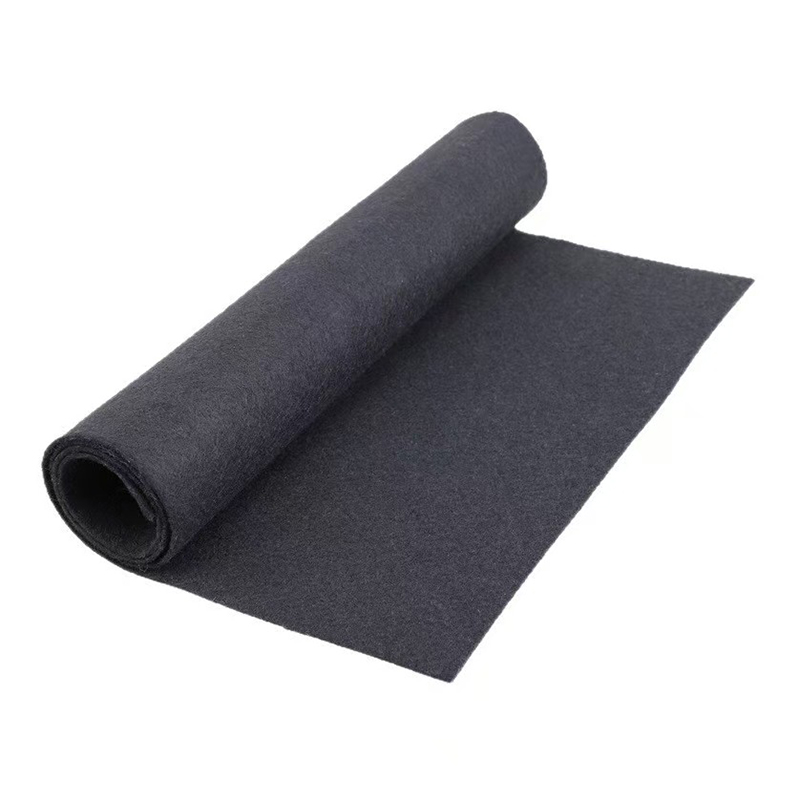 Needle-Punched Nonwoven Fabric for Automotive Trunk and Cargo LinersEngineered for trunk liners, this fabric offers dustproof, wear-resistant, and low-odor performance, combining lightweight protection with easy customization for various vehicle models.View Product →
Filtration and Industrial
Industrial filtration is one of the largest application areas for needle punched nonwoven fabric. Filter bags used in dust collectors benefit from the open, tortuous pore structure created by fiber entanglement. The fabric must withstand pulse-jet cleaning, chemical exposure, and temperature cycling. Polyester is the first choice for ambient temperature filters; other polymers are added when higher thermal or chemical resistance is required.
 Non-Woven Air Purification Filter Bags for Industrial Dust RemovalAvailable in polyester, polypropylene, or glass fiber, these filter bags suit HVAC and ventilation systems, providing high dust capacity, low resistance, and easy installation.View Product →
Geotechnical and Building
Geotextiles and roofing materials use needle punched fabric because of its ability to separate, filter, drain, and reinforce. In green roof drainage layers, asphalt overlay reinforcement, and interface isolation layers, the fabric must absorb stress without tearing. Here, elongation at break is as important as tensile strength.
Carpets and Flooring
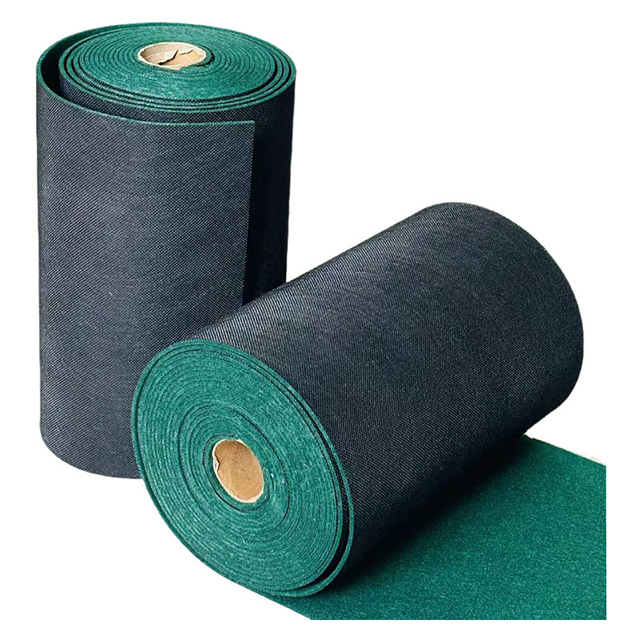
Needle punched carpets are manufactured as roll goods for temporary events, offices, and trade shows. The process allows wide rolls, custom colors, and logo printing at lower cost than woven carpets. Depending on the backing treatment, the carpet can perform as a non-slip mat or a protective floor covering.
Medical and Hygiene
Medical products such as breathable bandages, cast padding, wound dressing layers, and surgical gown elements can be made from needle punched fabric. These products require cleanliness, low dust, and skin compatibility. The material is often combined with other layers to add barrier or fluid resistance.
Agriculture and Horticulture
Agricultural applications include weed control cloth, frost protection blankets, greenhouse shading, and grow bags. Because the fabric is porous, water and air can reach the soil while weeds are suppressed. Outdoor use demands UV stabilized fibers; otherwise the fabric will degrade within a few seasons.
Cleaning and Consumer Goods
Cleaning cloth and mop head manufacturers value needle punched fabric for its high liquid absorption and dust pickup. The coarser fiber surface creates a mechanical scrubbing effect without using abrasive coatings. With different fiber blends and finishes, the fabric can be tailored for kitchen, automotive, or industrial wiping.
Customization and Finishing Options
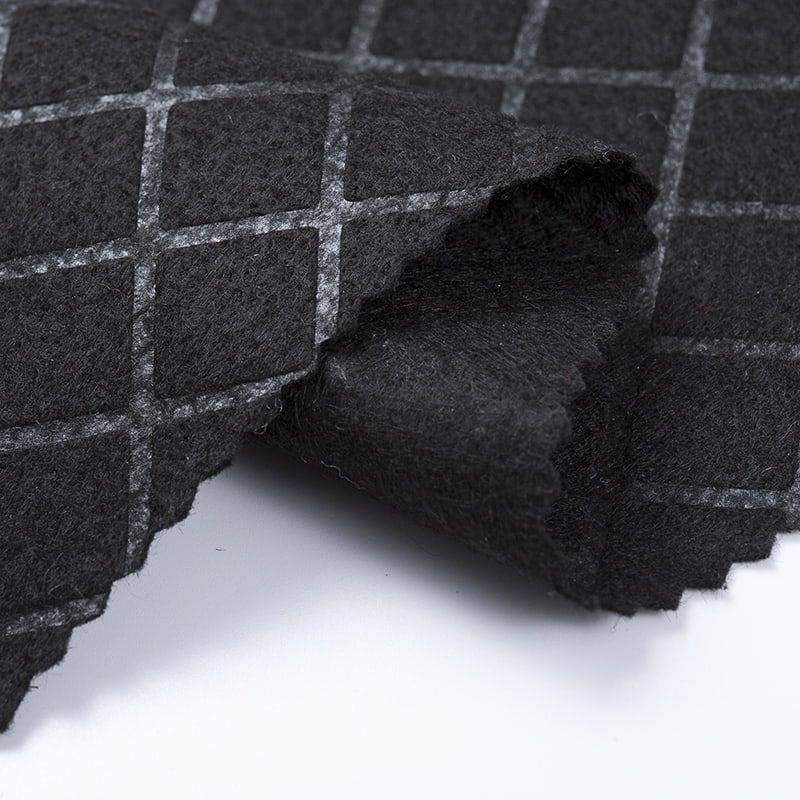
Needle punching is a flexible manufacturing platform, not a single fixed product. The base fabric can be finished with flame retardants, water repellents, antimicrobial agents, or UV inhibitors. Surface appearance can be changed by printing, embossing, or laminating. For assembly convenience, self-adhesive backings and anti-slip coatings are common.
Composite structures add another layer of possibilities. A needle punched fabric bonded to a film becomes a moisture barrier; bonded to a woven scrim, it gains dimensional stability; bonded to foam, it provides cushioning and insulation. These combinations allow a manufacturer to produce an exact solution instead of forcing a standard fabric into an unsuitable role.
How to Choose a Needle Punched Nonwoven Manufacturer
Selecting the right supplier for needle punched nonwoven fabric involves more than comparing price per kilogram. Three issues normally separate a reliable partner from a merchant of low-cost rolls.
- Certifications. GRS confirms that recycled content is traced accurately through production. OEKO-TEX certification shows that the finished fabric has been tested for substances that could harm skin or health. These are especially important for bedding, medical, and clothing applications.
- Quality control. A manufacturer who measures each batch and shares test charts will bring fewer surprises to your own production line. Ask which property they test and what tolerance they hold.
- Delivery capacity. Because needle punched fabric is a bulky item, freight cost and lead time are often undervalued. A supplier near a major export port can reduce inland transport time and damage risk.
Working with a supplier that offers multiple process steps in one location also simplifies communication. If you need punching, lamination, or coating in the same order, you avoid transferring material between factories. It also makes it easier to request quick samples when a new product is being developed.
Needle punched nonwoven fabric is a mature material with clear technical boundaries. It will not replace spunbond in very lightweight applications, and it is not a substitute for woven geotextiles when high modulus is required. For thick, absorbent, sound-damping, and mechanically robust products, it is often the most economical choice. Start with the mechanical requirements, verify the testing data, and choose a manufacturer who can deliver consistent quality in the form you need.
 Tel: +86 15700112297
 WhatApp: +86 15700112297
 E-mail:
 Yinziqiao Village, Shicong Town, Nanxun District, Huzhou City, Zhejiang Province, China