English
 中文简体
中文简体Content
A project manager at an exhibition contractor once told us that the hardest part of a two-week event build is not the stand structure, it is the floor. The hall is 5,000 square metres of polished concrete, the client wants a uniform colour, the installers have one night to lay it, and the carpet has to stay flat under thousands of visitors. The material that solves that problem, again and again, is needle-punch non-woven carpet. Needle-punch non-woven carpet is a mechanically entangled polyester flooring that combines fast installation, predictable performance and low cost per square metre, which makes it the reference product for temporary events, offices, automotive interiors and light commercial floors.
What Is a Needle-Punch Non-Woven Carpet?
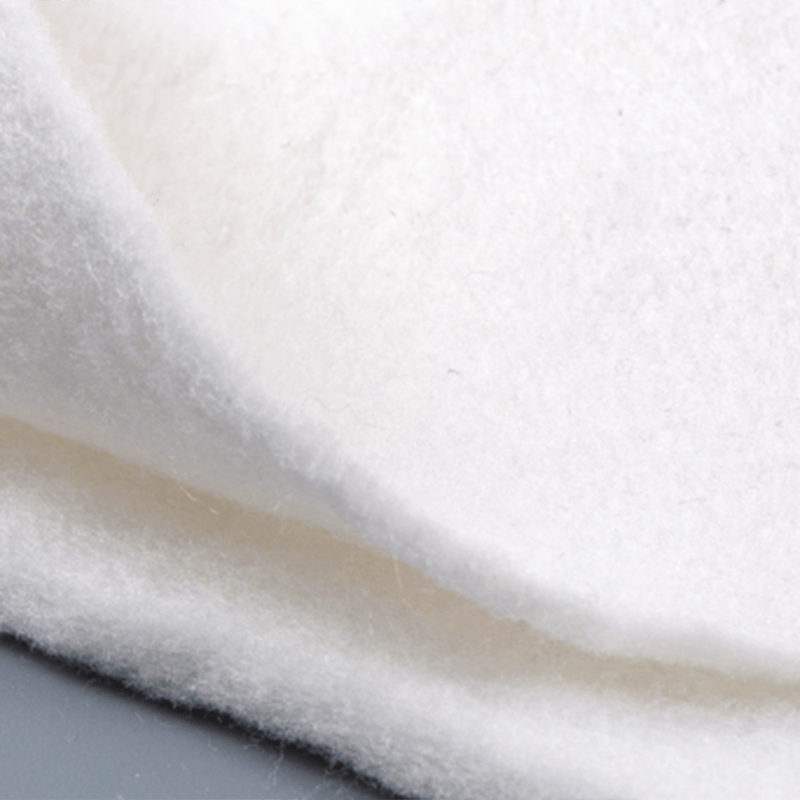
In plain terms, a needle-punch non-woven carpet is a sheet of staple fibres punched together with thousands of barbed needles until they lock into a dense, stable fabric. Unlike woven or tufted carpet, it contains no yarn and no woven backing. The fibres, usually polyester, are opened, carded into a web, cross-lapped to the required weight, and then passed through a needle loom. The barbs repeatedly push surface fibres into the interior, creating mechanical bonds. A final calendering step can smooth the surface, improve abrasion resistance, or consolidate the structure before slitting and rolling.
Because the process is dry-laid and web-based, property changes are achieved by adjusting fibre denier, web weight, punch density and finishing rather than by re-engineering a loom pattern. That is why needle-punch carpet is available in such a wide range of weights, thicknesses and surface treatments. For a B2B buyer, the practical effect is simple: the specification sheet, not the brand, determines whether the carpet will perform.
How It Differs from Other Carpets
The fastest way to judge a needle-punch carpet is to compare it with tufted and woven construction. Tufted carpet is built by inserting yarn loops into a pre-made backing; it feels soft underfoot but costs more and is harder to recycle. Woven carpet is the slowest and most expensive to produce, and it is rarely used where the floor will be discarded after a few days. Needle-punch non-woven carpet sits at the opposite end of the spectrum: it is produced directly from fibre, which keeps cost low, makes specifications consistent, and allows recycled polyester content without visible quality loss. If you want to understand the broader family of nonwovens, this overview of how nonwoven fabric types differ in use explains where carpet sits relative to industrial felts, geotextiles and filtration media.
| Factor | Needle-punch non-woven | Tufted | Woven |
|---|---|---|---|
| Production route | Dry-laid fibre entanglement | Yarn insertion into backing | Weaving of yarns |
| Typical weight | 200-600 gsm | 600-1,500 gsm | 700-2,000 gsm |
| Relative cost | Low | Medium-high | High |
| Best use | Events, offices, automotive, gyms | Residential and premium contract | Premium and heritage interiors |
| Customization speed | Fast; small minimum orders for colour and pattern | Moderate | Slow |
Where Needle-Punch Carpet Performs Best
Buyers usually choose needle-punch carpet because the application rewards consistency and replaceability rather than luxury pile. Four segments account for most of the volume.
Events, Ceremonies and Temporary Flooring
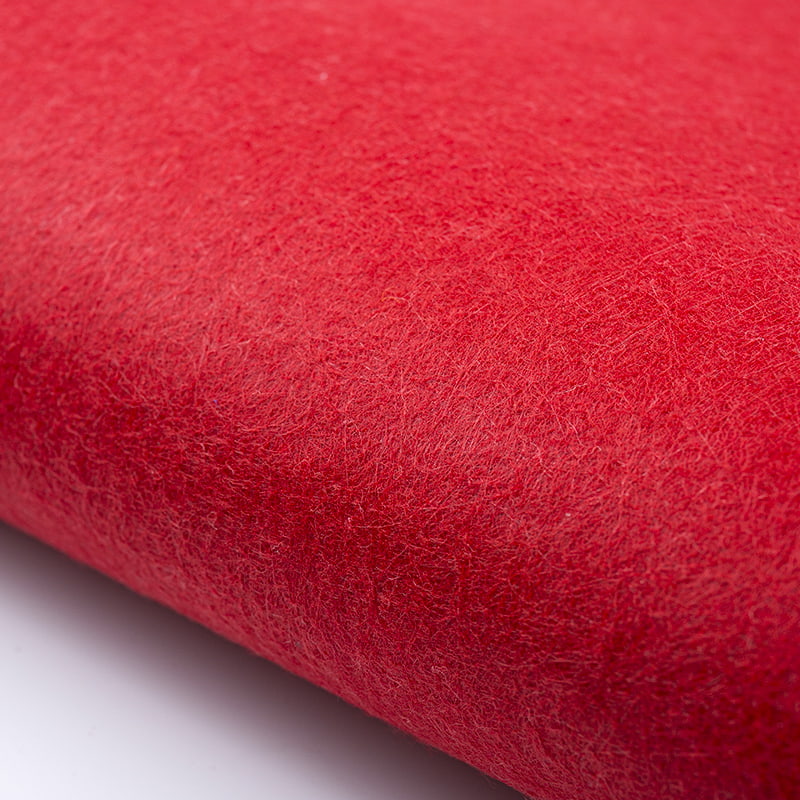
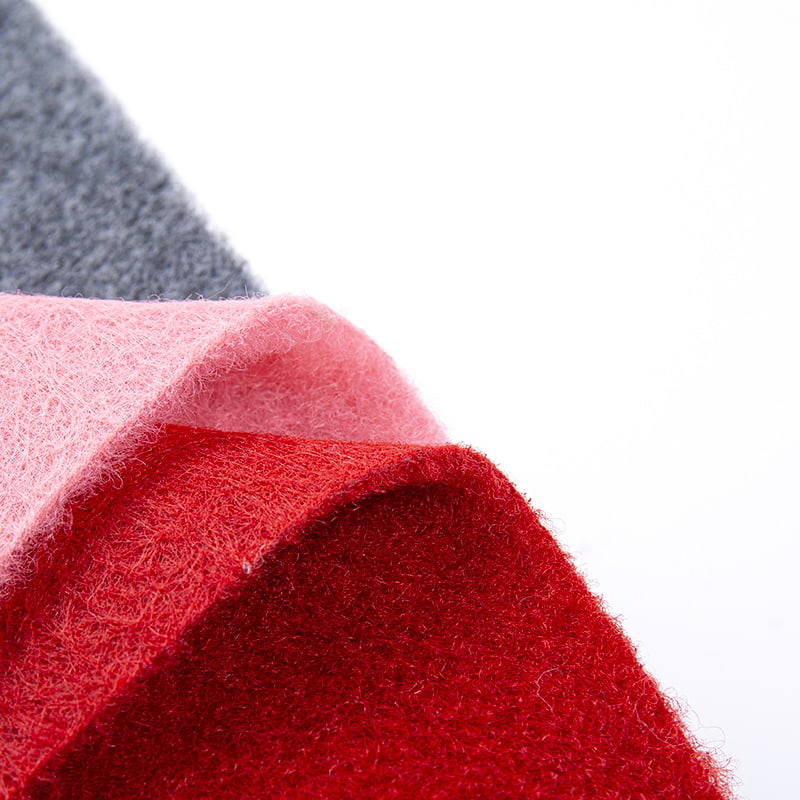
Trade shows, weddings, product launches and red-carpet ceremonies all need a floor that installs in hours and removes cleanly. A roll of 100% polyester durable red nonwoven carpet, for instance, resists crushing even when chairs and staging equipment stand on it overnight. The dense fibre structure also slows the spread of wear lines, so a 30-metre runner can survive a full day of foot traffic without showing a visible path. Because the carpet is rollable and lightweight, a two-person crew can lay a large hall without specialist equipment. This is also the segment where patterned surfaces are popular; the jacquard non-woven carpet construction method allows designs to be integrated into the felt itself rather than printed on top, which helps the pattern survive cleaning and heavy footfall.
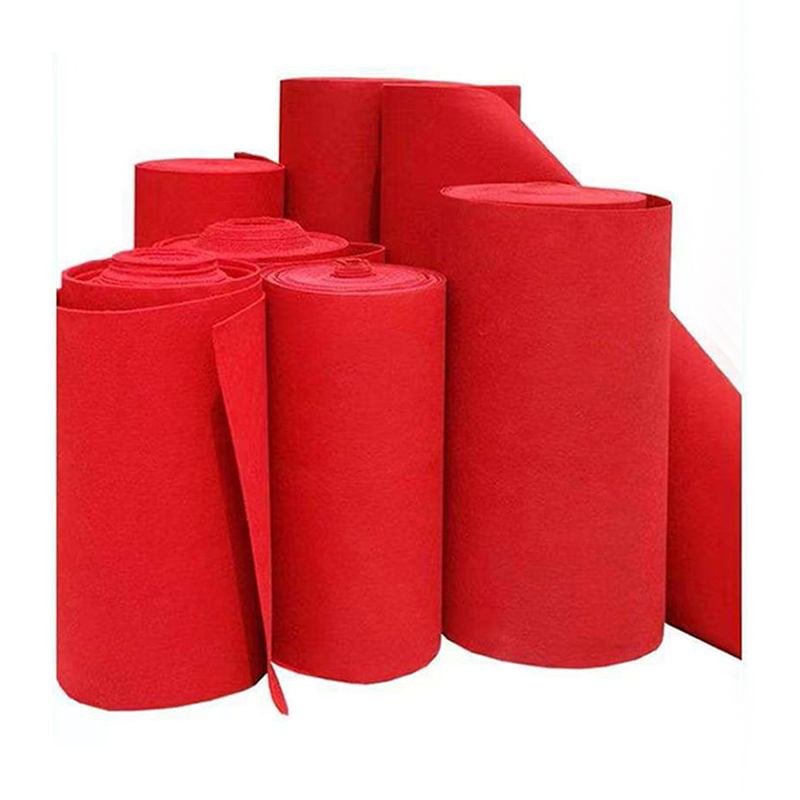 100% Polyester Durable Red Non-Woven Carpet Suppliers, Factory - Huzhou ChangyuaAs 100% Polyester Durable Red Non-Woven Carpet Suppliers and Factory in China, Changyuan offer Wholesale 100% Polyester Durable Red Non-W...View Product →
Offices and Commercial Interiors
Office carpeting has to handle rolling chairs, spilled coffee and frequent vacuuming. Here needle-punch carpet competes on total cost of ownership. A-grade stain-resistant office needle-punched nonwoven flooring uses finishing treatments and a denser web to keep liquids on the surface long enough to be wiped away. The uniform density of needle-punched construction also prevents the rutting that tufted loops can develop under castor wheels. For large open-plan floors, rolls reduce seam count compared with carpet tiles, and the fibre-locked edges do not fray when cut to fit around columns.
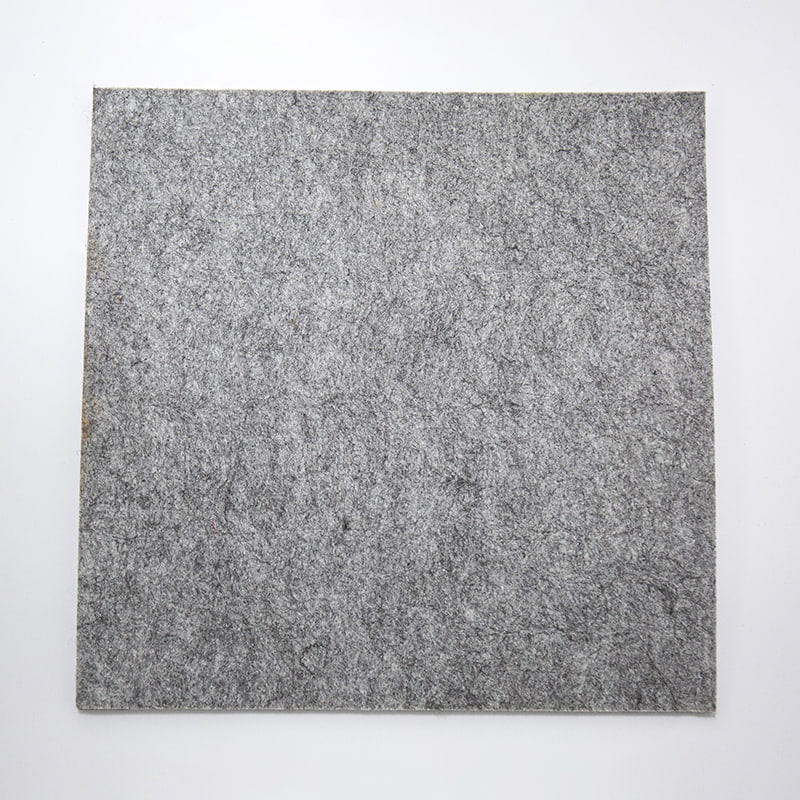 Stain-Resistant Office Needle-Punched Nonwoven Flooring Suppliers, Factory - HuzAs Stain-Resistant Office Needle-Punched Nonwoven Flooring Suppliers and Factory in China, Changyuan offer Wholesale Stain-Resistant Offi...View Product →
Automotive Interiors and Load Areas
Vehicle manufacturers and trim suppliers use needle-punch carpet in the passenger compartment, trunk and load floor because it can be moulded and die-cut without raveling. The same mechanical entanglement gives it acoustic absorption and dimensional stability under temperature changes. A dedicated stain-resistant nonwoven automotive carpet guide covers how fibre selection and finishing affect soiling, cleaning and service life in a vehicle environment.
Gyms, Fitness Studios and Temporary Sports Floors
Impact resistance is the deciding factor in sports flooring. Needle-punch carpet absorbs energy through its fibre matrix rather than through a thick foam layer, so it can be laid directly over hard concrete to protect joints during floor-based workouts. An impact-resistant gym and fitness needle-punched nonwoven flooring typically combines high basis weight with a tight surface finish to resist scuffs from dumbbells and cleats. It is also quieter than rubber rolls and easier to patch if a section is damaged during reconfiguration.
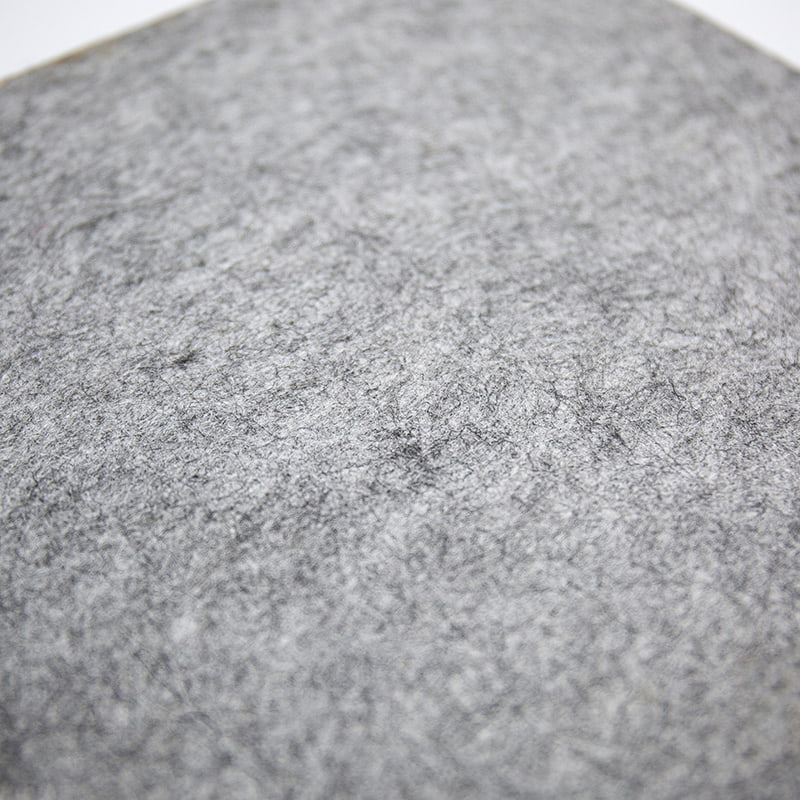 Impact Resistant Gym and Fitness Needle-Punched Nonwoven Flooring Suppliers, FacAs Impact Resistant Gym and Fitness Needle-Punched Nonwoven Flooring Suppliers and Factory in China, Changyuan offer Wholesale Impact Res...View Product →
What to Verify Before You Order
Because needle-punch carpet is defined by the production line rather than by a brand, a sample and a detailed specification sheet matter more than the product name. Three checks prevent most sourcing mistakes:
- Weight, density and dimensional stability.
- Slip resistance, backing and lamination.
- Colourfastness, recycled content and certifications.
Each check answers a different failure mode, and each should be confirmed on the production sample, not only in the technical datasheet.
Weight, Density and Dimensional Stability
Basis weight is the first number to compare, but density is what controls crush resistance and acoustics. Two rolls at 500 gsm can feel completely different if one uses coarse denier fibres at low punch density and the other uses fine fibres at high punch density. Ask the supplier for the punch density, fibre denier range and thickness under a standard load. Dimensional stability matters when the carpet is cut to fit around pillars or seats: needle-punch carpet should not stretch more than 2-3% in either direction, and the edges must stay clean when cut with a utility knife.
Slip Resistance, Backing and Lamination
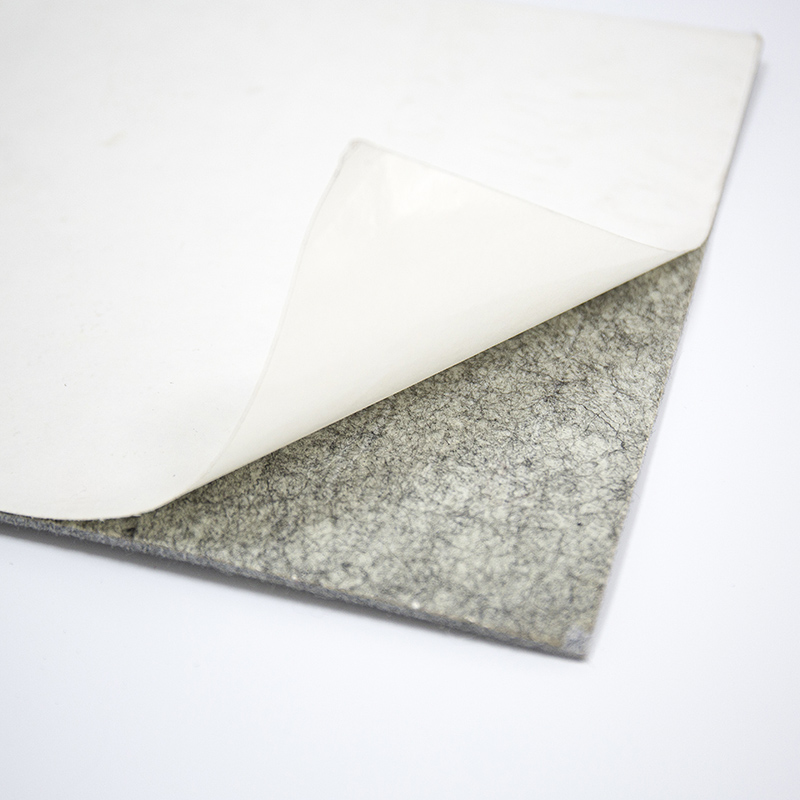
Event floors are walked on in high heels; office floors are rolled over by chairs; gym floors are stepped on in socks. Each case needs a different coefficient of friction. Unbacked needle-punch carpet relies on its own surface texture, while SBR or acrylic-latex backed versions add grip and prevent edge curling. Some suppliers offer self-adhesive backing for permanent installations. Always state the floor substrate and the expected traffic in your inquiry, because the same carpet can be safe in one environment and slippery in another if the friction has not been matched to the use.
Colourfastness, Recycled Content and Certifications
Colourfastness is tested against light and crocking, which is colour transfer by rubbing. For a wedding runner that stays down for one day, a basic grade is enough; for a three-month exhibition schedule, choose a grade with a lightfastness rating of at least 4 on the blue wool scale. On the sustainability side, recycled polyester content is increasingly demanded in tenders. Materials certified under GRS allow you to verify the recycled percentage through the supply chain, while OEKO-TEX certification confirms that the finished carpet has been tested for harmful substances. These two certifications cover the claims that most European and North American buyers will ask for.
Maintenance and Realistic Service Life
Needle-punch carpet does not hide dirt; it holds it in the upper fibre layer, which is actually an advantage. Dry vacuuming lifts most debris, and a damp cloth or low-moisture extraction handles spills. Do not use rotating brush machines on unbacked grades, because the brush can loosen surface fibres. For temporary events, plan the carpet as a consumable: a standard 250 gsm grade will look acceptable for two to five days of heavy traffic, while a 500 gsm reinforced grade can serve several months in an office if protected from direct sun and moisture. Repair is equally simple: cut out the damaged section and seam in a replacement piece, because the fibre entanglement accepts clean edges and the repair is nearly invisible in one-directional fibre carpets.
The Bottom Line
Needle-punch non-woven carpet wins for the same reason it was invented: it delivers a flat, consistent, replaceable floor at a fraction of the cost of woven or tufted alternatives. It is not the best choice for luxury residential interiors, but for events, offices, automotive load areas and fitness floors it is the rational default. When you compare quotes, focus on the spec sheet, including weight, density, backing, colourfastness, slip resistance and certifications, and insist on a production sample before bulk. With those numbers in hand, needle-punch carpet is one of the easiest flooring products to specify and one of the hardest to get wrong.
 Tel: +86 15700112297
  WhatApp: +86 15700112297
  E-mail:
  Yinziqiao Village, Shicong Town, Nanxun District, Huzhou City, Zhejiang Province, China