English
 中文简体
中文简体Content
- 1 The Role of Automobile Needle-Punch Nonwoven Fabrics in Vehicle Interiors
- 2 How Needle-Punching Delivers Automotive-Grade Performance
- 3 Key Application Areas in Modern Vehicles
- 4 How to Evaluate a Supplier of Automobile Needle-Punch Nonwoven Fabrics
- 5 Practical Questions to Ask Before You Place an Order
- 6 The Bottom Line for Automotive Buyers
The Role of Automobile Needle-Punch Nonwoven Fabrics in Vehicle Interiors
Automobile needle-punch nonwoven fabrics sit behind almost every visible surface of a modern car. They reduce road noise in the footwell, keep trunk liners from tearing when luggage shifts, and give headliners a clean, moldable surface over curved roof panels. For purchasing teams and product engineers, the conclusion is straightforward: needle-punched nonwoven is one of the most economical ways to combine acoustic damping, dimensional precision, and mechanical protection in a single textile layer.
Because the automotive industry works against tight cost and weight targets, the value of this material comes from its process. Staple polyester fibers are mechanically intertwined by barbed needles, creating a fabric with open porosity, controlled thickness, and no reliance on chemical binders. That simple structural principle explains why the same product family can be light enough for a sunshade and dense enough for a wheel-arch guard.
How Needle-Punching Delivers Automotive-Grade Performance
Needle punching is a dry-laid mechanical bonding process. A carding machine opens and aligns fibers into a web, and a needle loom then drives thousands of barbed needles through the web to hook and entangle the fibers. The main adjustment points are needle density, penetration depth, and line speed. Small changes in these settings affect thickness, air permeability, density, and surface cohesion. If you are comparing needle-punch with other production routes, our guide to different nonwoven fabric types can help you understand which families suit different vehicle zones.
Properties the vehicle assembly line expects
When an OEM evaluates a needle-punch fabric for automotive use, the datasheet is only a starting point. Appearance, thickness under pressure, compression set, and resistance to edge fraying after die-cutting matter just as much. In typical automotive grades, basis weight ranges from roughly 100 g/m2 for interior trim to more than 800 g/m2 for wheel arch protection. Needle punching gives the fabric a controlled porosity that absorbs sound, while fiber entanglement gives it enough tensile strength to survive pressing, lamination, and trimming without delaminating. For cabin parts, flame retardancy is usually specified as well, often checked against FMVSS 302 on the final composite rather than on the base roll.
Where the fabric must perform
The table below summarises the main vehicle zones and the requirements that influence material selection.
| Application | Primary Function | Typical Requirement |
|---|---|---|
| Headliner backing | Sound absorption and roof insulation | Low weight, stable thickness, good moldability |
| Sunshade core | Shade layer and structural support | Controlled density, no fiber dusting |
| Trunk cargo liner | Impact protection and wear resistance | High tear strength, moisture resistance |
| Floor carpet | Durability and appearance retention | Abrasion resistance, stain resistance, formability |
| Wheel arch protector | Anti-stone-chip and road-noise barrier | High basis weight, energy absorption |
| Seat clip felt | Anti-squeak and gap filling | Consistent thickness, controlled compressibility |
Fogging and VOC emission values are now part of many automotive specifications, especially for closed cabins. Even when the fabric is not visible, the material needs a stable chemical profile, which is why fiber quality and finishing chemicals deserve as much attention as mechanical properties.
Key Application Areas in Modern Vehicles
Needle-punch nonwovens appear throughout the car, and each installation zone imposes its own constraints on density, thickness, hand feel, and post-processing behavior.
Headliners, sunshades, and interior trim
Headliners need a fabric that can be laminated to foam, pressed into deep curves, and still retain enough porosity to damp noise. A decorative felt nonwoven for car headliners meets the visual and acoustic demands of this area without adding unnecessary weight. Sunshade materials use a denser needle-punched construction to block light while staying flexible enough for edge wrapping. The same clean manufacturing logic carries over to cabin trim and side-panel covers.
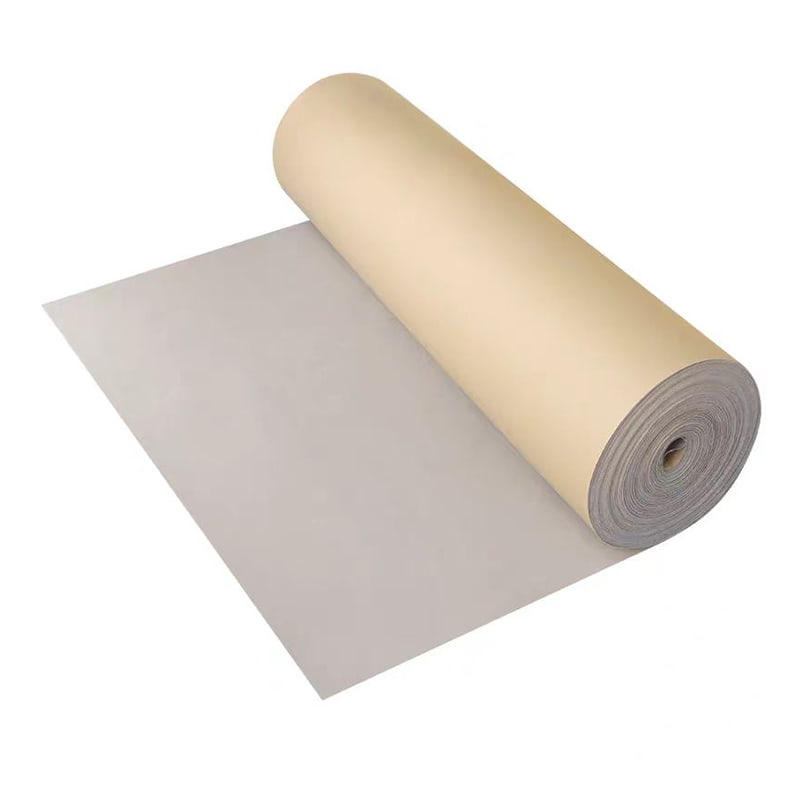 Decorative Felt Nonwovens for Car Headliners Suppliers, Factory - Huzhou ChangyuAs Decorative Felt Nonwovens for Car Headliners Suppliers and Factory in China, Changyuan offer Wholesale Decorative Felt Nonwovens for C...View Product →
Trunk liners and cargo protection
Trunks endure sharp luggage edges, wet umbrellas, and repeated dragging. A reliable needlepunched nonwoven fabric for auto trunk cargo liners gives the base layer the tear strength and shape retention needed to survive those conditions. Because the fabric is cut and wrapped around moldings, edge stability and consistent elongation are critical for a clean assembly fit.
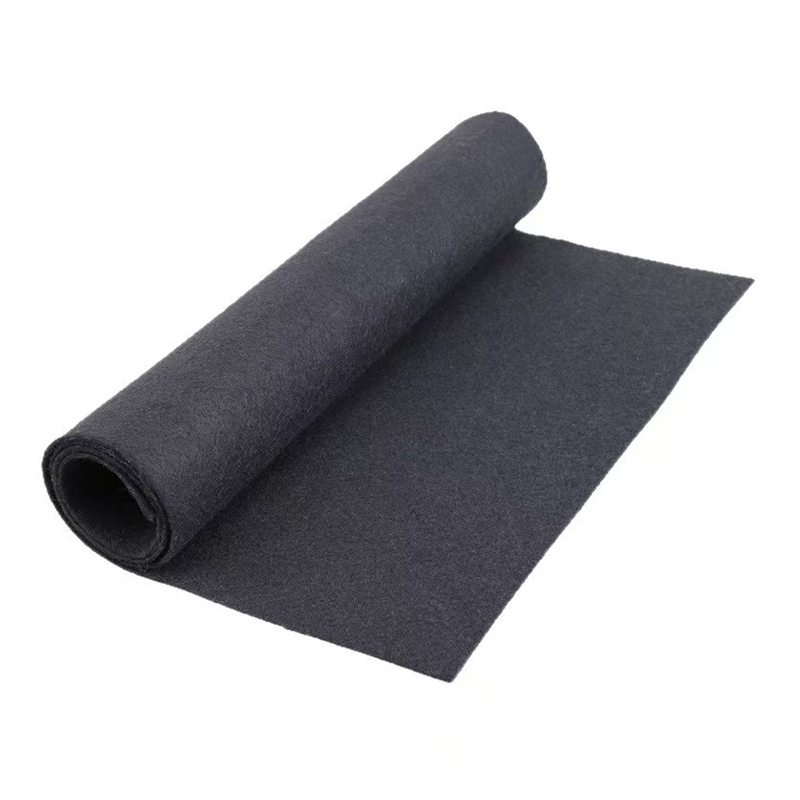 Needle-Punched Nonwoven Fabric for Auto Trunk & Cargo Liners Suppliers, Factory As Needle-Punched Nonwoven Fabric for Auto Trunk & Cargo Liners Suppliers and Factory in China, Changyuan offer Wholesale Needle-Punched ...View Product →
Carpet systems and floor coverings
Vehicle carpets have to look good under showroom lighting and survive years of shoe abrasion. A stain-resistant nonwoven automotive carpet can act as the visible face layer of a molded carpet module, with needle-punch density controlling both appearance and recovery under heel pressure. For fleet operators and rental vehicles, this product family also reduces the cost of cleaning and replacement. For more detail on the maintenance side of that specification, the stain-resistant automotive carpet maintenance and application guide explains what buyers should verify before award.
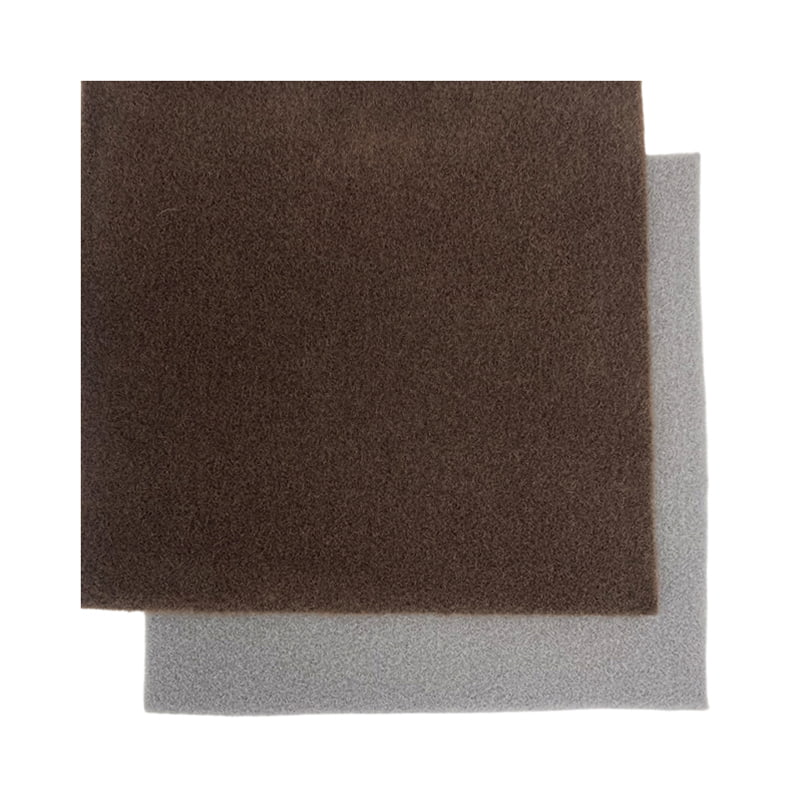 Stain-Resistant Non-Woven Automotive Carpet Suppliers, Factory - Huzhou ChangyuaAs Stain-Resistant Non-Woven Automotive Carpet Suppliers and Factory in China, Changyuan offer Wholesale Stain-Resistant Non-Woven Automo...View Product →
How to Evaluate a Supplier of Automobile Needle-Punch Nonwoven Fabrics
Price per kilogram is a misleading metric. The real cost depends on yield during cutting and lamination, consistency between production lots, and how much the supplier understands the final part.
Ask for the data behind the roll
Request a physical data sheet that includes basis weight, thickness at a stated pressure, tensile strength in the machine and cross directions, elongation, and air permeability. Then ask how the supplier controls needle density and penetration depth during long runs. A minor variation in needle penetration can change compression behavior and surface feel, which directly affects installation quality.
Check certifications and fiber source
Automotive buyers increasingly require traceability. A GRS certification confirms recycled fiber content, while an OEKO-TEX label gives a baseline for restricted substances. Treat these marks as verifiable documents, not marketing slogans. Ask for the corresponding certificates and confirm that they cover the production site that will actually supply your order.
Plan for secondary operations
Most automotive nonwovens are not used in the state they leave the needle loom. Lamination, flame-retardant finishing, printing, embossing, and self-adhesive backing all change the material. A supplier that can coordinate these steps will shorten your development cycle. If you need a custom color or finish, establish minimum order quantities and sample criteria early so that the first production run matches the approved sample.
Practical Questions to Ask Before You Place an Order
These questions will separate a material supplier from a true development partner.
- What is the basis weight tolerance across the roll width and from roll to roll?
- What thickness does the fabric hold at the specified applied pressure?
- Can you provide tear strength, elongation, and air permeability results from the same production lot as the samples?
- How do flame-retardant or self-adhesive treatments affect thickness and stiffness?
- What is the minimum order quantity for a custom color, printed pattern, or lamination?
- Can the production site supply GRS and OEKO-TEX documentation for audit?
Once the material reaches your converter or assembly plant, the best needle-punch line in the world cannot compensate for a specification that was never clearly defined. The key is to start with the end-use requirement, test the actual fabric under your own molding or lamination conditions, and then lock down the agreed parameters with the supplier.
The Bottom Line for Automotive Buyers
Automobile needle-punch nonwoven fabrics are not a commodity substitute for other textiles. They are an engineered material family with distinct strengths in acoustic control, mechanical protection, and cost-efficient processing. For headliner backings, trunk liners, wheel arch protectors, carpets, and dozens of smaller interior parts, needle-punched polyester delivers consistent performance after molding, lamination, and cutting. Match the basis weight and finish to the installation zone, verify the supplier's process controls, and the fabric will perform for the life of the vehicle.
 Tel: +86 15700112297
  WhatApp: +86 15700112297
  E-mail:
  Yinziqiao Village, Shicong Town, Nanxun District, Huzhou City, Zhejiang Province, China