Industry Knowledge
Why Needle-Punched Nonwoven Wipes Outperform Traditional Kitchen Cleaning Cloths
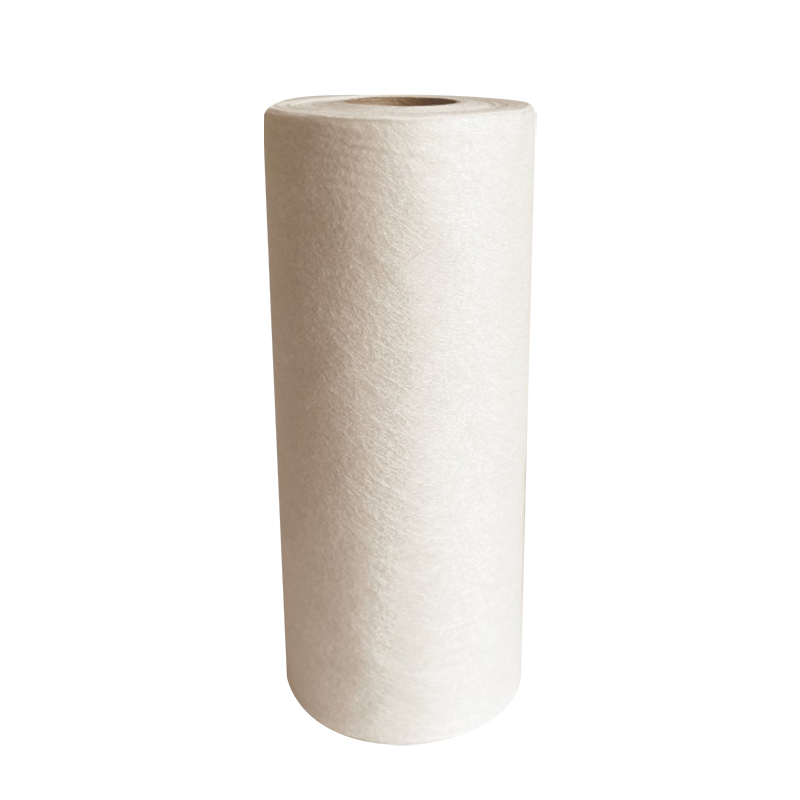
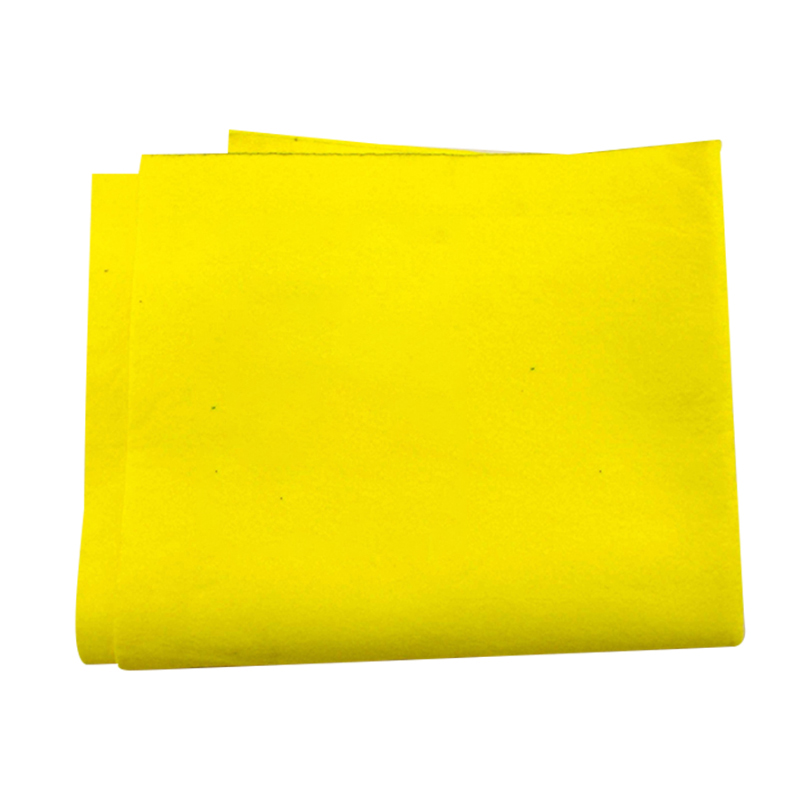
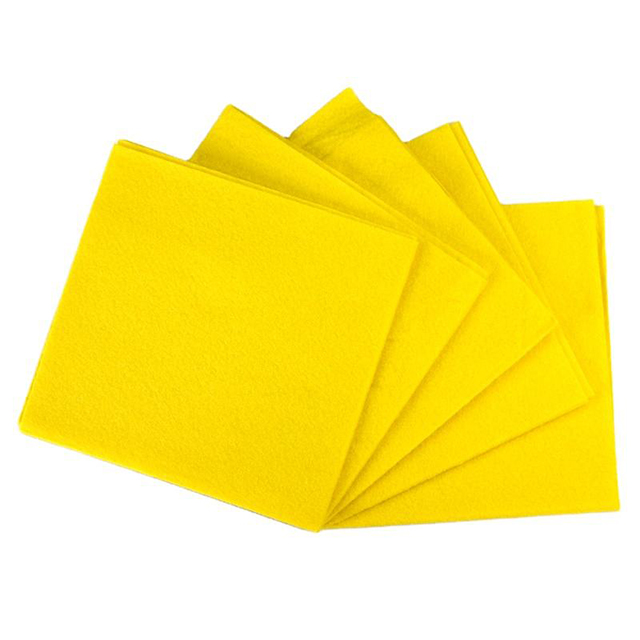
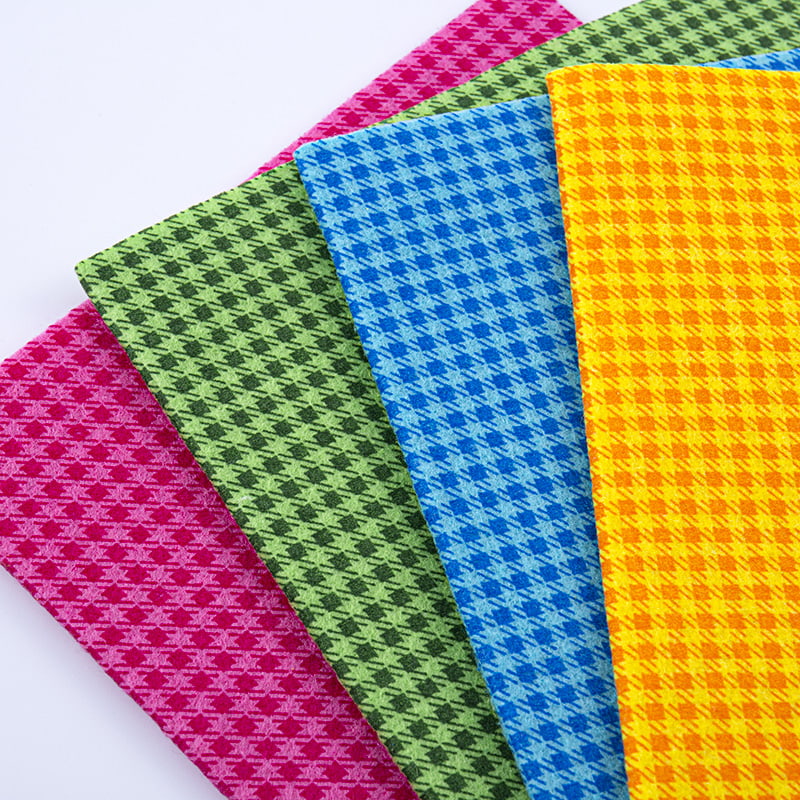
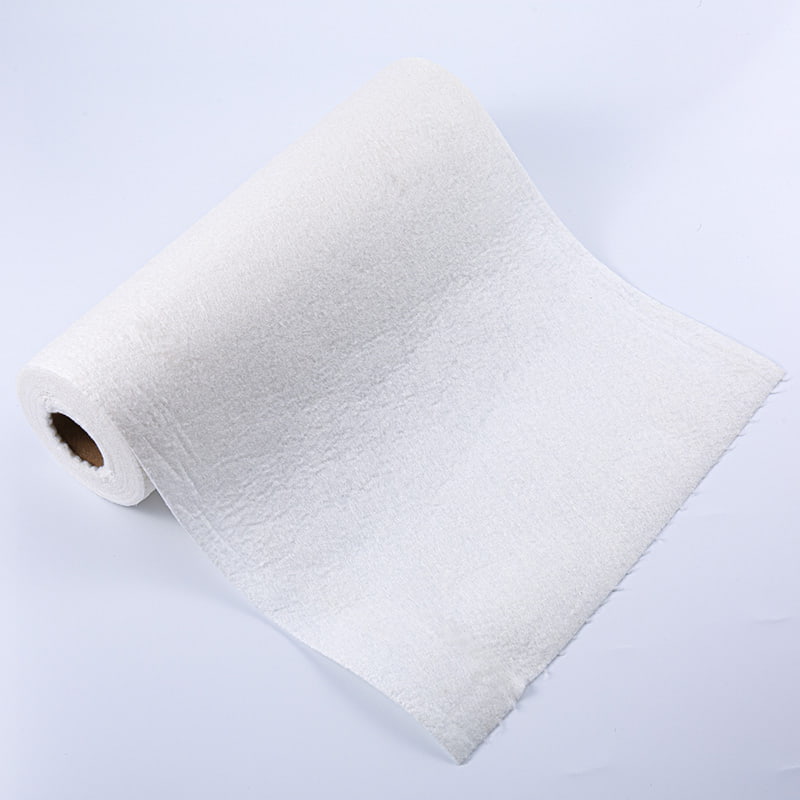
When selecting a Kitchen Cleaning Cloth for commercial or household use, the manufacturing process determines far more than texture. Needle-punched nonwovens are produced by mechanically entangling fibers using barbed needles, creating a three-dimensional structure without chemical binders. This process yields a fabric that retains absorbency while resisting disintegration under repeated scrubbing. For Huzhou Changyuan Nonwoven Co., Ltd., located in Zhejiang Province with efficient access to Shanghai Port, this technical foundation supports the production of Nonwoven Cleaning Wipes that maintain structural integrity across hundreds of wash cycles. The absence of thermal bonding points means the fibers move independently, allowing the wipe to conform to irregular surfaces like grout lines or cast-iron textures where standard woven cloths simply glide over contaminants.
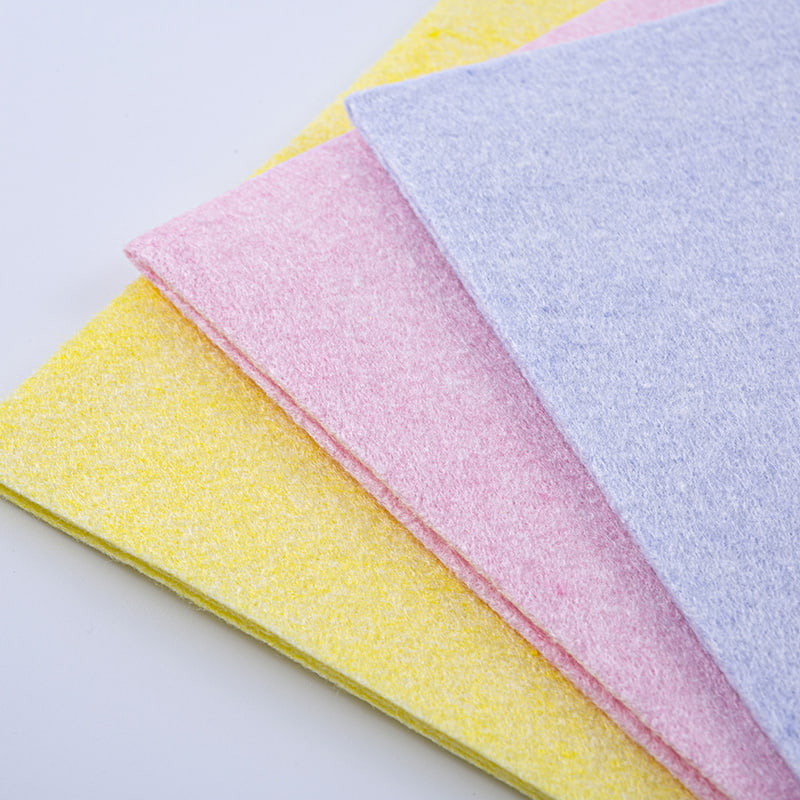
Not all Kitchen Cleaning Nonwoven Wipes share the same fiber architecture. The blend ratio between polyester and viscose directly dictates absorbency, durability, and lint generation. A 70/30 polyester-viscose composition offers a balanced profile: polyester provides tensile strength for scrubbing dried food residues, while viscose contributes capillary action that pulls grease away from surfaces rather than smearing it. Huzhou Changyuan Nonwoven Co., Ltd. engineers its Needle-Punched Nonwoven Wipes with denier variations between 1.5D and 6D, where finer fibers populate the surface layer for softness and coarser fibers reinforce the substrate for longevity. This layered construction is particularly critical in professional kitchen environments where a single wipe must transition from wiping down stainless steel prep tables to absorbing spills on textured rubber flooring without shedding fibers that could contaminate food preparation zones.
GRS and OEKO-TEX® Certifications: What They Actually Mean for Nonwoven Cleaning Wipes
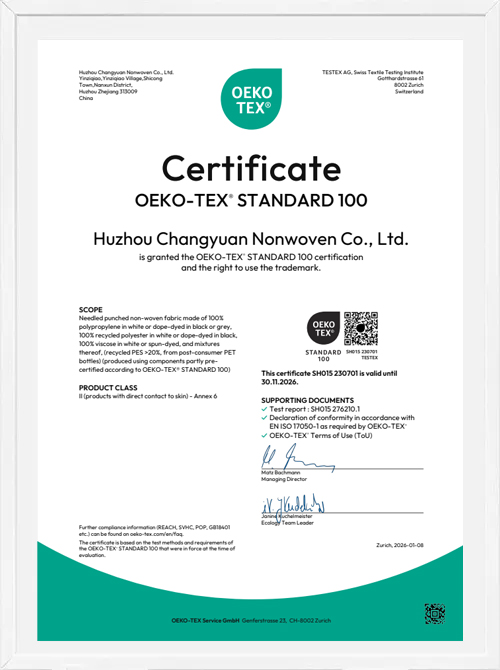
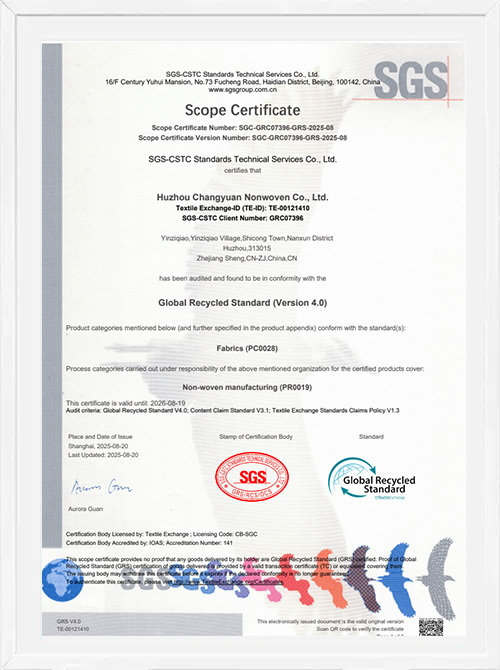
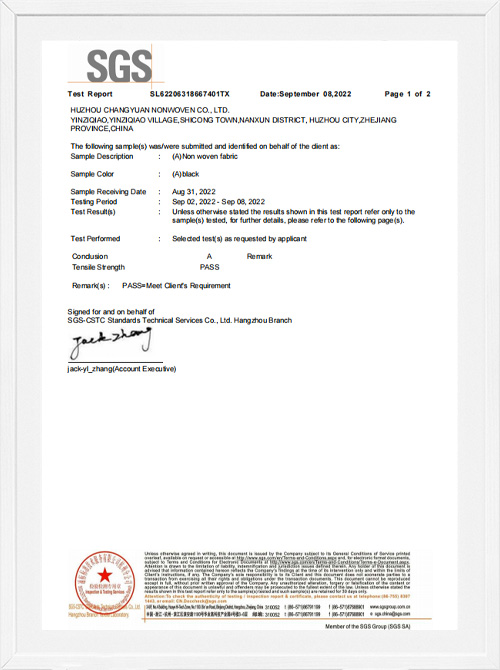
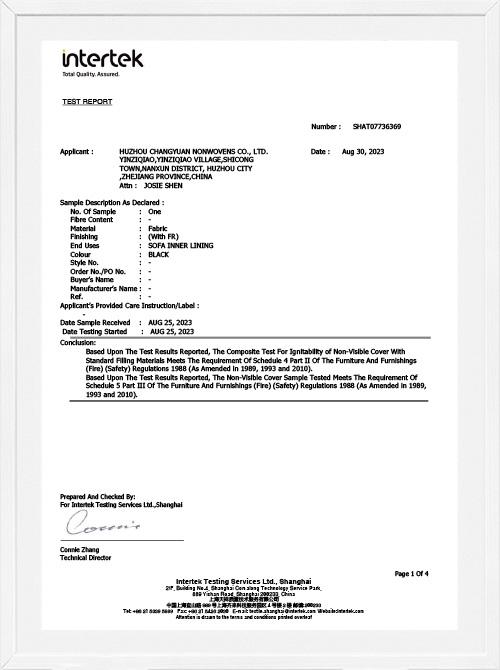
Certification logos on packaging often go unexplained, yet they carry substantive implications for procurement decisions. The Global Recycled Standard (GRS) certifies that Nonwoven Cleaning Wipes contain verified recycled content and meet strict environmental criteria throughout the supply chain—including chemical restrictions and social compliance. For buyers sourcing Kitchen Cleaning Cloth products, GRS certification means traceable recycled fiber inputs, typically post-consumer PET bottles diverted from landfill. OEKO-TEX® Standard 100, meanwhile, tests for harmful substances at the finished product level, ensuring that Kitchen Cleaning Nonwoven Wipes are safe for direct contact with food-contact surfaces and skin. Huzhou Changyuan Nonwoven Co., Ltd. maintains both certifications across its needle-punched nonwoven portfolio, which extends from sofa linings and automotive interior fabrics to medical-grade materials and geotextiles. This dual certification framework matters particularly for European and North American distributors who face increasingly stringent due diligence requirements under extended producer responsibility legislation.
Surface Compatibility Guide for Needle-Punched Nonwoven Wipes in Kitchen Environments
Different kitchen surfaces respond differently to abrasive contact, and using the wrong Kitchen Cleaning Cloth can cause permanent damage. The table below maps common kitchen surfaces to the appropriate Needle-Punched Nonwoven Wipes specifications based on fiber density and surface treatment.
| Kitchen Surface |
Recommended Wipe Specification |
Risk if Mismatched |
| Stainless Steel (Brushed Finish) |
Fine fiber (1.5D), low-density needle-punch |
Scratch marks visible under raking light |
| Cast Iron Cookware |
Coarse fiber (4D–6D), high-density needle-punch |
Insufficient abrasion to remove polymerized oils |
| Glass Ceramic Cooktops |
Microfiber-blended needle-punch, ultra-soft face |
Micro-scratches causing thermal stress fractures |
| Granite or Quartz Countertops |
Medium fiber (2.5D–3D), standard needle-punch density |
Residue buildup in porous sealant layers |
| Non-Stick Coated Pans (Teflon/Ceramic) |
Ultra-fine fiber (1.2D), minimal needle-punch penetration |
Coating degradation and accelerated wear |
Huzhou Changyuan Nonwoven Co., Ltd. customizes Nonwoven Cleaning Wipes across this entire specification spectrum, leveraging its proximity to Shanghai Port for rapid sample delivery and bulk shipment to global kitchenware distributors.
Logistics Advantages of Sourcing Kitchen Cleaning Nonwoven Wipes from Zhejiang
Geographic positioning significantly impacts total landed cost for Kitchen Cleaning Nonwoven Wipes, yet it is frequently overlooked in supplier evaluation matrices. Huzhou Changyuan Nonwoven Co., Ltd. operates from Zhejiang Province, approximately 150 kilometers from Shanghai Port—one of the world's busiest container terminals. This proximity translates into measurable supply chain benefits:
- Reduced inland freight costs: Trucking nonwoven rolls from factory to port costs roughly 40% less than equivalent distances from inland provinces, a saving that compounds across high-volume Needle-Punched Nonwoven Wipes orders.
- Shorter order-to-ship timelines: Standard lead time from production completion to vessel loading is 3–5 days versus 10–14 days for suppliers located in western manufacturing hubs, enabling just-in-time inventory strategies for seasonal Kitchen Cleaning Cloth demand spikes.
- Direct access to major shipping lanes: Shanghai Port serves over 600 destinations globally, offering competitive freight rates and frequent sailings that reduce demurrage risk for time-sensitive Nonwoven Cleaning Wipes contracts.
For buyers managing multi-product portfolios that include automotive interior fabrics, geotextiles, or medical-grade nonwovens alongside Kitchen Cleaning Nonwoven Wipes, consolidating shipments through a single Zhejiang-based supplier like Huzhou Changyuan Nonwoven Co., Ltd. further optimizes container utilization and customs clearance efficiency.
Needle-Punch Density and Its Impact on Kitchen Cleaning Cloth Longevity
Needle-punch density—measured in punches per square centimeter—is a hidden variable that determines how many wash cycles a Kitchen Cleaning Cloth survives before fiber loss compromises performance. At densities below 150 punches/cm², the fiber web remains loosely consolidated; while this creates excellent initial absorbency, the wipe sheds fibers rapidly when agitated in commercial washing machines. At densities above 400 punches/cm², the fabric becomes overly compacted, reducing liquid uptake capacity and making the Needle-Punched Nonwoven Wipes feel stiff and board-like. Huzhou Changyuan Nonwoven Co., Ltd. targets an optimal range of 250–320 punches/cm² for its standard Nonwoven Cleaning Wipes, achieving a balance where the fabric holds together through 200+ industrial washes while maintaining the pliability needed to wring out by hand. This specification is particularly relevant for hospitality sector buyers who launder Kitchen Cleaning Nonwoven Wipes daily and require predictable replacement cycles to manage operational budgets.
Cross-Industry Technology Transfer: What Medical-Grade Standards Bring to Kitchen Cleaning Nonwoven Wipes
Huzhou Changyuan Nonwoven Co., Ltd. manufactures medical-grade nonwovens alongside its consumer and industrial product lines, and this dual capability creates unexpected quality spillovers into Kitchen Cleaning Nonwoven Wipes. Medical nonwoven production demands ISO 13485-compliant cleanroom environments, bioburden control, and lot traceability—disciplines that elevate baseline manufacturing hygiene. When the same needle-punching lines are calibrated for medical applications, the precision settings carry over to Needle-Punched Nonwoven Wipes intended for kitchen use. The result is tighter weight tolerances (±3% versus industry-standard ±8%), more consistent fiber distribution that eliminates thin spots prone to tearing, and reduced particulate contamination that could otherwise transfer to food-contact surfaces. Buyers sourcing Kitchen Cleaning Cloth from manufacturers with medical-grade capabilities effectively receive production-line quality assurance that exceeds typical commodity-grade standards, even when the end product is priced for the mass retail market.
Sustainable Sourcing: How Recycled Content Integrates into Nonwoven Cleaning Wipes Without Performance Loss
The transition from virgin to recycled fiber in Nonwoven Cleaning Wipes is technically challenging because post-consumer PET exhibits variable molecular weight and contamination levels that can weaken needle-punched structures. Huzhou Changyuan Nonwoven Co., Ltd. addresses this through a multi-stage filtration and blending protocol: recycled PET flakes are extruded into staple fiber with a denier range of 2.5D–4D, then blended with virgin viscose at ratios that preserve the mechanical entanglement quality essential for durable Needle-Punched Nonwoven Wipes. GRS certification verifies that the recycled content meets chain-of-custody requirements, while OEKO-TEX® testing confirms that the regenerated fibers do not introduce heavy metals or restricted dyes into Kitchen Cleaning Nonwoven Wipes. For European buyers subject to the EU Green Deal's packaging sustainability targets, this verified recycled content provides the documentation needed for environmental product declarations without sacrificing the scrubbing performance expected from a premium Kitchen Cleaning Cloth.
Moisture Management Engineering in Kitchen Cleaning Cloth Design
Effective Kitchen Cleaning Cloth design requires controlling not just how much liquid the fabric absorbs, but how quickly it releases that moisture during wringing and how rapidly it dries between uses to prevent bacterial proliferation. Needle-Punched Nonwoven Wipes achieve this through engineered pore size distribution: the needle-punching process creates a gradient structure with larger pores in the substrate for liquid storage and smaller pores at the surface for controlled release. Huzhou Changyuan Nonwoven Co., Ltd. fine-tunes this gradient by varying needle penetration depth across the production line—shallow penetration for the face layer and deep penetration for the backing layer. The resulting Kitchen Cleaning Nonwoven Wipes exhibit a moisture retention ratio of approximately 1:8 (fabric weight to absorbed liquid weight) and release 70% of that liquid with a single twist, compared to 40–50% for conventional cotton terry cloths. This engineering detail matters in commercial kitchens where staff change Nonwoven Cleaning Wipes frequently and need materials that dry within two hours of hanging to minimize mildew odor and cross-contamination risk.


 English
 中文简体
中文简体 Furniture
 Carpet
 Automotive
 Composite
 Geosynthetics
 Medical
 Filtration
 Cleaning Supplies
 Building Industry
 Agricultural Use
 Consumer Goods

 Lint-Free & Tear-Resistant
  Soft & Flexible
 Tel: +86 15700112297
  WhatApp: +86 15700112297
  E-mail:
  Yinziqiao Village, Shicong Town, Nanxun District, Huzhou City, Zhejiang Province, China