English
 中文简体
Content
- 1 What Counts as a Raw Material in Nonwoven Production?
- 2 The Main Raw Materials Used in Non Woven Fabric
- 3 Polyester Fibre: The Backbone of Needle-Punched Nonwovens
- 4 How the Raw Material Shapes the Manufacturing Process
- 5 Matching Raw Materials to Real Applications
- 6 Sustainability, Certifications and Recycled Raw Materials
- 7 A Practical Sourcing Checklist
Ask ten buyers what the raw material of non woven fabric is and you may collect ten different answers: polypropylene granules, polyester staple fibre, viscose, wood pulp, cotton or a bio-based polymer. None of those answers is wrong. Nonwoven is not a single material but a family of engineered fabrics, and the raw material behind every roll depends on how the web is formed and how it is bonded.
Since 2018 our team in Huzhou has run needle-punched lines day after day, and one lesson keeps repeating itself: the fibre decision made at the beginning of a project decides how the finished roll behaves on the customer's production line, not just how it feels in a sample swatch.
What Counts as a Raw Material in Nonwoven Production?
Inside a nonwoven plant, the phrase "raw material" covers two quite different starting points. Mixing them up is the fastest way to buy the wrong product, so it is worth separating them before we compare anything else.
Polymer Granules vs. Staple Fibre
- Polymer granules. Polypropylene, polyester or polyamide pellets are dried, melted and extruded into continuous filaments on spunbond, meltblown or flashspun lines. Nothing is carded; the fibre is created and laid down in one continuous step.
- Staple fibre. Short, cut fibres of polyester, polypropylene, viscose or cotton are opened, blended, carded and cross-lapped into a web, then bonded by needles, heat, chemicals or water jets. Needle-punched production sits firmly in this group.
- Wood pulp and reclaimed fibre. Fluff pulp sheets and recycled textile fibre feed airlaid and some spunlace structures, where absorbency matters more than tensile strength.
Once you know which route a fabric comes from, the short list of possible raw materials narrows very quickly.
The Main Raw Materials Used in Non Woven Fabric
The table below summarises the fibres and polymers that appear most often in commercial production, the processes they suit, and the products they usually end up in.
| Raw material | Typical form | Key strengths | Common processes | Typical end uses |
|---|---|---|---|---|
| Polypropylene (PP) | Granules or staple fibre | Low density, chemical resistance, low cost | Spunbond, meltblown, needle punching | Hygiene, masks, bags, geotextiles |
| Polyester (PET) | Staple fibre or filament | High tensile strength, dimensional stability, heat resistance | Needle punching, spunbond, thermal bonding | Furniture padding, automotive trim, filtration, carpet |
| Viscose / rayon | Staple fibre | Soft hand, high absorbency, good drape | Spunlace, needle punching, airlaid | Wipes, dressings, hygiene |
| Cotton | Staple fibre | Natural softness, breathability, purity | Spunlace, needle punching | Medical cotton, personal care, wipes |
| Wood pulp | Fluff pulp sheet | Excellent absorbency, low cost | Airlaid, spunlace | Hygiene cores, wipes, tabletop |
| PLA | Staple fibre or granules | Bio-based, compostable in industrial conditions | Needle punching, spunbond | Packaging, agricultural, disposables |
| Bi-component fibre | Sheath-core staple fibre | Self-bonding, softness, bulk | Thermal bonding, needle punching | Bedding, filtration, hygiene |
Polyester Fibre: The Backbone of Needle-Punched Nonwovens
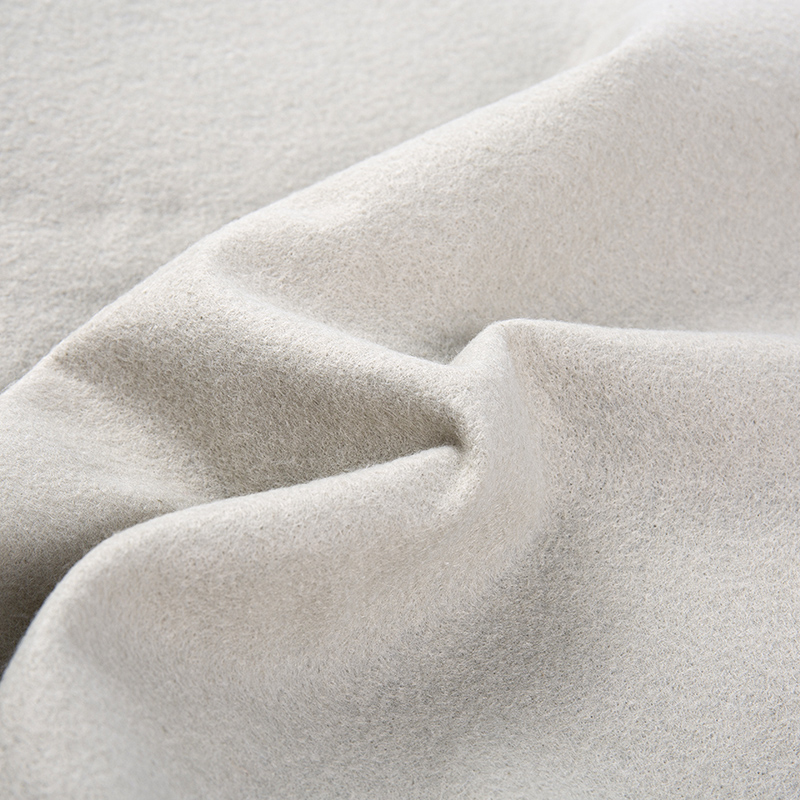
For needle-punched nonwovens, polyester staple fibre is the material we handle most. It cards cleanly, entangles predictably under the needles, and holds its thickness after compression, which is exactly what a mattress builder or an automotive trim supplier needs from a roll of fabric.
The appeal is mechanical rather than cosmetic. Polyester brings high tensile strength, good dimensional stability, a moisture regain of roughly 0.4 percent, and resistance to rot, mildew and most common chemicals. It also tolerates the heat and friction of needle punching better than many natural fibres. Specifications matter as much as the polymer itself: coarser fibres around 6 to 15 denier build loft and structure, finer fibres soften the surface, and cut lengths of roughly 51 to 76 millimetres keep the carding process stable.
Polyester is also one of the easier raw materials to source responsibly. Recycled PET from post-consumer bottles can be spun into staple fibre with essentially the same performance as virgin polymer, which is why recycled content has become a routine request rather than a niche one.
How the Raw Material Shapes the Manufacturing Process
Raw material and process are locked together. Change one and you usually have to adjust the other, which is why we prefer to discuss fibre specification and end use in the same conversation.
- Fibre fineness and length. Long, uniform fibres card into a more even web; short or brittle fibres create thin spots that show up later as weak points in the finished roll.
- Crimp and cohesion. Crimped fibres interlock with each other before bonding, so the web survives handling between the card and the needle loom.
- Thermal behaviour. Bi-component sheath-core fibres melt on the outside and bond to their neighbours without any chemical binder, which keeps the fabric softer.
- Absorbency and surface energy. Viscose and pulp drink water; polyester and polypropylene push it away. That single difference decides whether a fibre belongs in a wipe or in a waterproof felt.
If you would like to see how those differences play out across finished product families, our overview of how different nonwoven types differ in use is a useful companion to this article.
Matching Raw Materials to Real Applications
Theory is helpful, but purchasing decisions are usually made against a drawing, a sample or a competitor's roll that must be matched. These are the patterns we see most often.
Mattresses, Sofas and Upholstered Furniture
Furniture applications need a balance of loft, resilience and price. Polyester fibre in the 6 to 15 denier range gives the spring-back that keeps a mattress pad from flattening, while blends with bi-component fibre improve softness and reduce fibre shedding during cutting.
 Breathable Highly Adaptable Needle-Punched Nonwoven Bed PaddingProduct information Transform your sleep experience with breathable highly adaptable nonwoven bed padding, made from premium needle-punched nonwoven fabrics. Designed ...View Product →
Automotive Interiors and Trim
Automotive parts demand consistent thickness, low odour and resistance to heat and abrasion. Polyester felt is a natural fit for headliners, trunk liners, seat components and floor carpet, and it can be needled to different densities depending on whether the part must absorb sound or simply cover a surface.
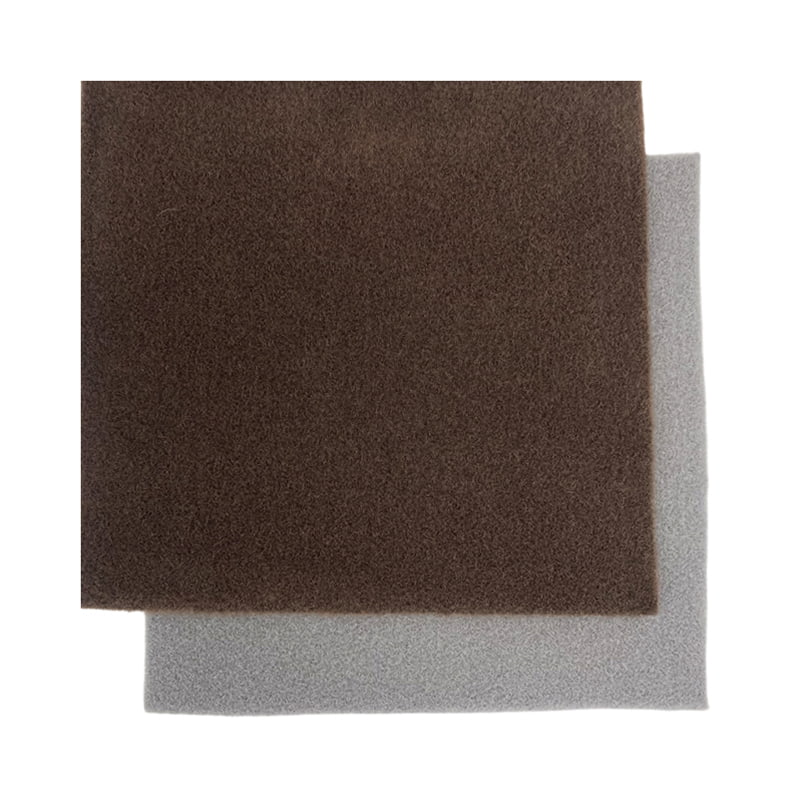 Stain-Resistant Non-Woven Automotive CarpetProduct information Stain-resistant non-woven automotive carpet is a high-performance flooring solution designed to combine durability, functionality, and aesthetic ap...View Product →
Filtration and Industrial Air Handling
Filter media are usually judged on two numbers: efficiency and pressure drop. Polyester fibre offers good strength and chemical resistance for dust collection, while finer deniers and composite layers tighten the pore structure when higher capture rates are required.
 Non-Woven Air Purification Filter Bags | Industrial Dust Removal for Ventilation & Air ConProduct information Key AdvantagesView Product →
Agriculture, Geotextiles and Medical Consumables
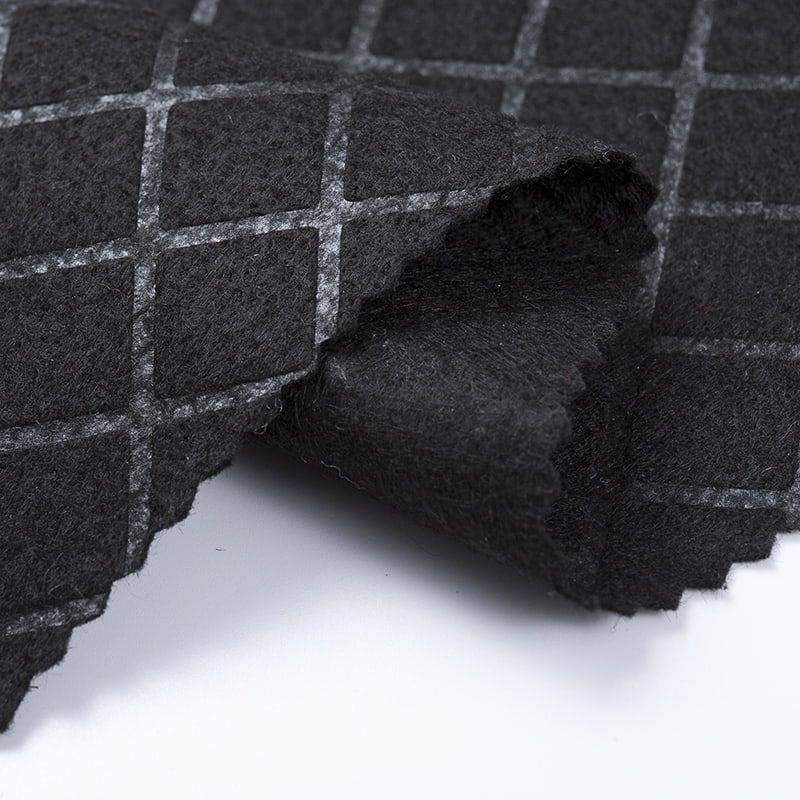
Outdoor and civil engineering products need UV stability, drainage and enough tensile strength to survive installation, and polypropylene or polyester are the usual answers. For example, a well-made grass-proof cloth combines a dense needle-punched structure with a black or dark surface so that light cannot reach the soil beneath. In medical and hygiene items, by contrast, the raw material discussion shifts towards absorbency, purity and skin compatibility, where viscose, cotton and pulp take the leading roles.
Sustainability, Certifications and Recycled Raw Materials
Recycled and bio-based raw materials are now part of mainstream sourcing conversations rather than a marketing footnote. Recycled PET fibre is widely available, and chain-of-custody schemes such as the Global Recycled Standard let a buyer trace recycled content from the fibre bale through to the finished roll. For textiles that touch the skin, OEKO-TEX testing gives reassurance that restricted substances stay within recognised limits.
Bio-based options deserve a realistic view. PLA and other compostable polymers perform well in some needle-punched and spunbond applications, but they generally require industrial composting conditions, and their heat resistance is lower than that of PET. Choosing them is a deliberate trade-off, not a free upgrade.
A Practical Sourcing Checklist
Before you confirm a fibre specification, work through these questions with your supplier.
- What is the end-use environment? Indoor furniture, hot engine bays and open agricultural fields each rule out different fibres.
- Which mechanical properties are non-negotiable? Tensile strength, elongation, tear resistance and compression recovery are all traceable back to fibre type and denier.
- Do you need weight, thickness or density tolerances? Fibre blending directly affects how tightly those tolerances can be held.
- Are recycled or certified materials required? Recycled content, colour and traceability all affect lead time.
- What finishing steps follow the fabric? Printing, embossing, flame retardant treatment and lamination each interact differently with the base fibre.
- Can the supplier provide a consistent repeat order? Ask about fibre sourcing stability, not only the first sample.
Huzhou Changyuan Nonwoven Co., Ltd. is a needle-punched nonwoven manufacturer based in Shizong Town, Nanxun District, Huzhou, Zhejiang. Founded in 2018, the company now operates from an 80,000 square metre facility with more than 200 employees and supplies furniture, automotive, construction, geotechnical, medical, filtration, agricultural, carpet and cleaning applications. Materials are available with GRS and OEKO-TEX certification, and the plant's location close to Shanghai Port helps keep export delivery schedules predictable.
If you are still weighing which raw material fits your product, send us your application details, target weight and performance requirements. We will recommend a fibre specification and a needle-punched construction that match your budget, then produce samples for your own testing before any volume order is placed.

 Tel: +86 15700112297
 WhatApp: +86 15700112297
 E-mail:
 Yinziqiao Village, Shicong Town, Nanxun District, Huzhou City, Zhejiang Province, China