English
 中文简体
Content
- 1 What Makes Nonwoven Filter Media Different
- 2 How Needle-Punched Nonwoven Filters Are Made
- 3 The Main Types of Nonwoven Filters and Where They Fit
- 4 Matching Filter Media to the Application
- 5 What to Specify When You Order Nonwoven Filter Media
- 6 Quality Control, Certification, and Delivery
- 7 Finding the Right Filter Media Partner
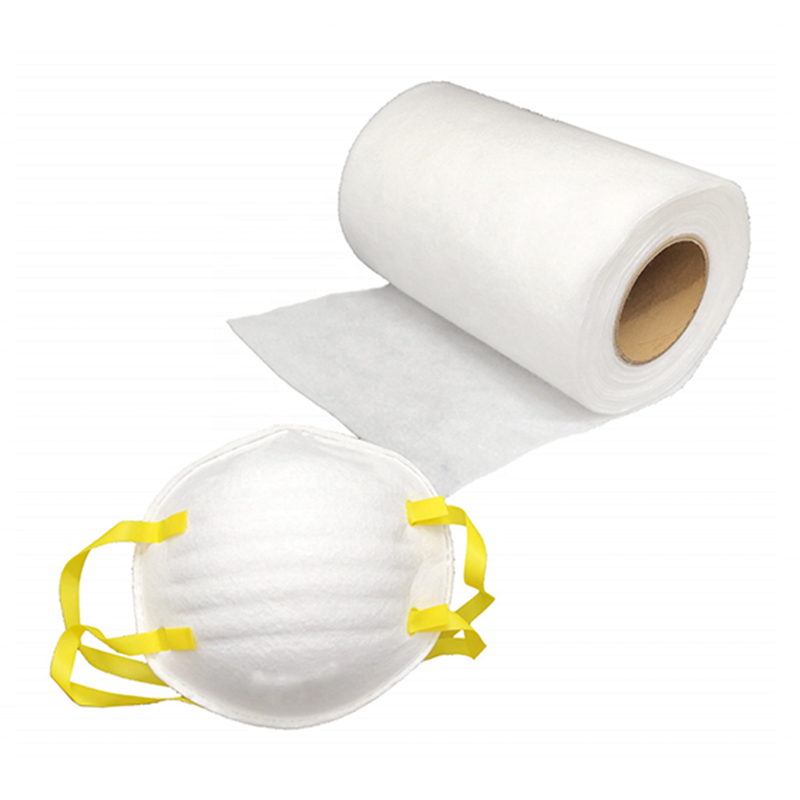
Nonwoven filters are the quiet workhorses of modern industry. They capture dust before it reaches a factory floor, keep hydraulic oil clean enough to protect pumps and valves, and trap fine particles inside the air purifier sitting in a living room. Unlike woven cloth or paper media, a nonwoven filter is built from randomly oriented fibers bonded into a three-dimensional web. That random, layered structure creates a deep and tortuous pore network, and it is precisely this network that allows high filtration efficiency at a surprisingly low pressure drop.
As a needle-punched nonwoven manufacturer serving furniture, automotive, medical, and industrial filtration customers, we spend most of our time thinking about how fiber choice, web formation, and needling density change the way a filter behaves. This guide explains what nonwoven filters are, how they are made, where each type fits, and how to specify media that performs the way your application requires.
What Makes Nonwoven Filter Media Different
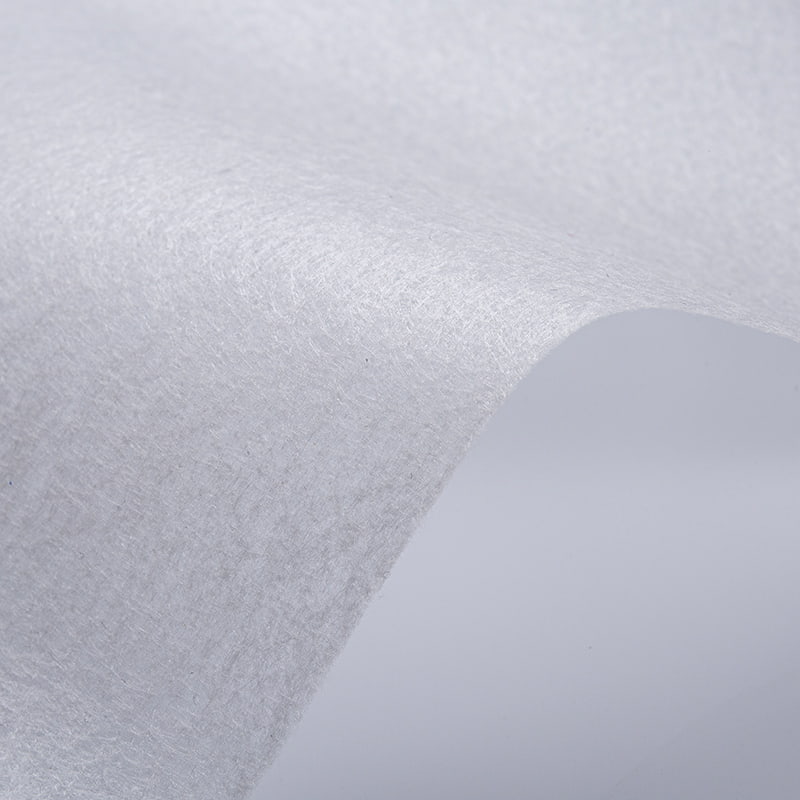
Filter media generally fall into three families: woven fabrics, paper or meltblown sheets, and nonwoven fabrics. Woven media filter mainly on the surface, so particles build a cake that must be cleaned or replaced. Paper and meltblown media are thin and efficient, but they load quickly and can tear under mechanical stress. Needle-punched nonwovens occupy a useful middle ground. Because fibers are entangled through the full thickness of the web, particles are captured both on the surface and inside the structure. This depth filtration gives needle-punched media a high dust-holding capacity, good mechanical toughness, and the ability to be pleated, sewn, welded, or die-cut without falling apart.
The variables we control are straightforward but powerful: fiber type and fineness, web weight, needling density and depth, and post-treatment. A heavier, denser web filters finer particles but resists airflow more. A loftier web lets air pass easily but captures fewer fine particles. Good filter design is the art of balancing the two.
How Needle-Punched Nonwoven Filters Are Made
Every roll of needle-punched filter media follows roughly the same route through our plant:
- Fiber opening and blending: polyester, polypropylene, aramid, or recycled fibers are opened, cleaned, and blended to a consistent recipe.
- Carding and cross-lapping: fibers are aligned into a thin web, then layered back and forth to build the weight and isotropy the filter needs.
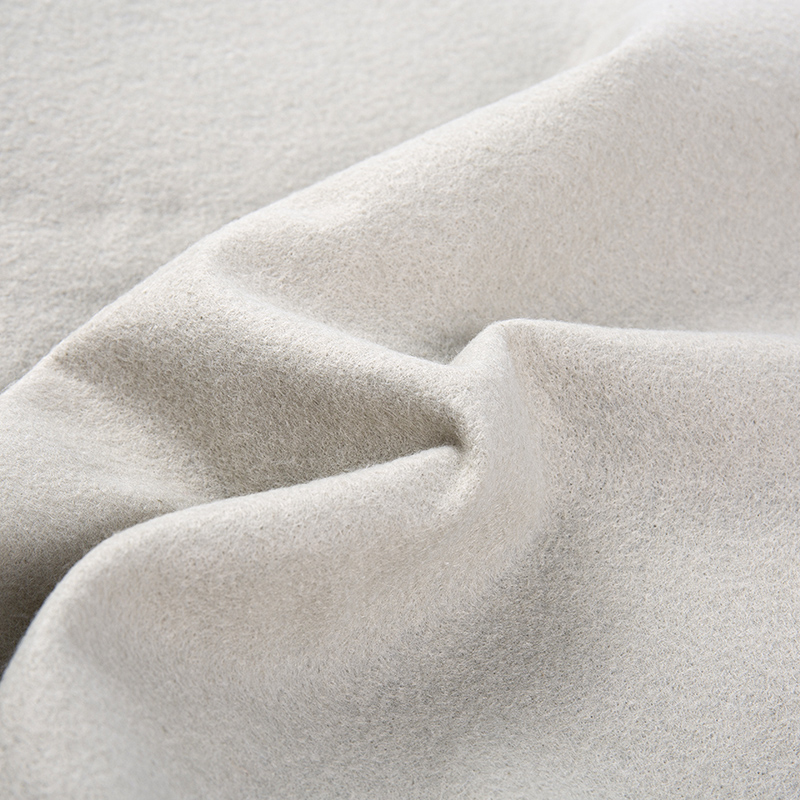
- Needle punching: thousands of barbed needles push fibers through the web, mechanically entangling them into a stable fabric without chemical binders. Needling density sets pore size and tensile strength.
- Post-treatment: calendering, singeing, heat setting, antistatic or oleophobic finishing, or lamination with a membrane or support scrim, depending on the filtration duty.
- Slitting, inspection, and packing: rolls are cut to the width your converting line needs and checked for weight, thickness, air permeability, and tensile strength.
Because needling is a mechanical process, we can tune it precisely. That flexibility is why one production platform can supply a soft 80 g/m² electrostatic layer for a household purifier and a tough 500 g/m² felt for a pulse-jet dust collector.
The Main Types of Nonwoven Filters and Where They Fit
Most filtration enquiries we receive fall into three broad groups: dust and process air, liquids and lubricants, and indoor air or appliance filtration. If you would like a wider view of how nonwoven fabrics differ by end use, we have published a practical comparison of nonwoven fabric types and their applications.
Industrial Dust Collection and Ventilation
Pulse-jet filter bags, cartridge pleats, and pleated panels for dust collectors are classic needle-punched applications. Polyester needle felt with a singed or PTFE-coated surface resists abrasion while releasing the dust cake cleanly during pulse cleaning. Aramid or PPS fibers step in when exhaust gas runs hot, and antistatic fibers protect bags in explosive dust environments such as woodworking or metal polishing. Cement lines, foundries, and steel plants all depend on media that can survive thousands of cleaning cycles.
 Non-Woven Air Purification Filter Bags | Industrial Dust Removal for Ventilation & Air ConProduct information Key AdvantagesView Product →
Liquid, Oil, and Coolant Filtration
In liquid service, the filter must cope with viscosity, chemical attack, and constant mechanical load. Needle-punched polyester and polypropylene media are used as separator layers in oil-water separation, as pre-filters ahead of finer cartridges, and as support layers in lubricant and coolant circuits. Here the priorities shift to oil resistance, dimensional stability under pressure, and consistent pore size, so the media neither collapses nor channels.
 High Mechanical Strength Oil-Resistant Separator Needle-Punched NonwovenProduct information Maximize performance with our high mechanical strength oil-resistant separator, crafted from advanced needle punched nonwoven fabrics. This robust ...View Product →
Indoor Air Purification and Appliances
Household and commercial air purifiers, range hoods, and pet-care appliances rely on lighter nonwoven filter layers. Electrostatic filter cotton captures fine dust and pollen through a combination of mechanical interception and electrostatic attraction, while composite screens pair a nonwoven pre-filter with a finer functional layer to protect the main filter. These products are usually thin, low in pressure drop, and designed to be replaced regularly, so consistency from roll to roll matters as much as peak performance.
 Pet Air Purifier Filter Composite ScreenProduct information Key AdvantagesView Product →
Matching Filter Media to the Application
The table below summarizes how needle-punched media are typically specified across common filtration duties. Treat it as a starting point rather than a fixed rule, because the right answer always depends on particle size, air-to-cloth ratio, and cleaning method.
| Application | Typical fiber | Typical weight (g/m²) | Key requirement | Common product forms |
|---|---|---|---|---|
| Industrial dust collection | Polyester, aramid, PPS | 350-550 | Dust holding capacity, abrasion resistance | Filter bags, pleated cartridges |
| Liquid and lubricant filtration | Polyester, polypropylene | 200-400 | Oil resistance, mechanical strength | Separator layers, pre-filter sheets |
| Indoor air purification | Polypropylene, polyester | 80-300 | Low pressure drop, stable efficiency | Electrostatic cotton, composite screens |
| Medical and protective | Polypropylene | 20-80 | Fine fiber, breathability | Mask layers, wound contact media |
| Automotive cabin and HVAC | Polyester | 150-350 | Formability, odor and dust control | Cabin filter media, HVAC inserts |
What to Specify When You Order Nonwoven Filter Media
Clear specifications save weeks of back-and-forth sampling. Before you request a quote, gather the following:
- Fiber type and any certification requirement, such as GRS recycled content or OEKO-TEX® ecological safety.
- Weight per square meter and thickness tolerance.
- Air permeability or pore size target, plus the test method your lab uses.
- Filtration efficiency and pressure drop at your operating flow rate.
- Mechanical requirements: tensile strength, elongation, tear resistance, and stiffness.
- Chemical or thermal exposure: oil, coolant, acid, humidity, or continuous temperature.
- Converting method: pleating, sewing, ultrasonic welding, die cutting, or lamination.
- Roll width, core size, roll diameter, and packing requirements.
Sharing a sample of the media you use today is often the fastest route. We can measure its weight, thickness, and permeability, then match or improve on it.
Quality Control, Certification, and Delivery
Filter media that vary from roll to roll create real problems downstream: pleaters jam, pleat heights drift, and efficiency results stop repeating. Our quality control follows the material from incoming fiber to finished roll, checking weight, thickness, tensile strength, and air permeability at defined intervals. For customers who need documentation, our materials are available with GRS and OEKO-TEX® certification, which supports recycled-content claims and textile ecological safety requirements.
Production takes place in an 80,000 square meter facility in Huzhou, Zhejiang, with more than 200 employees and needle-punching lines that can be configured for different web weights and post-treatments. Our position near the Port of Shanghai helps keep export lead times predictable, which matters when filter media feeds a customer's own production schedule.
Finding the Right Filter Media Partner
Nonwoven filters reward careful specification. Get the fiber, weight, and structure right, and a filter works quietly for months. Get them wrong, and you pay for it in pressure drop, replacement frequency, and downtime. We are always happy to review your application, suggest a starting construction, and send samples for you to test on your own converting line.
Explore our needle-punched nonwoven product range or contact our team with your filtration requirements, and we will help you move from a rough idea to a production-ready filter medium.
 Tel: +86 15700112297
 WhatApp: +86 15700112297
 E-mail:
 Yinziqiao Village, Shicong Town, Nanxun District, Huzhou City, Zhejiang Province, China