English
 中文简体
Content
- 1 What Diaper Recycling Actually Recovers
- 2 Why Needle Punching Suits Recycled Fiber
- 3 Where Recovered Hygiene Fiber Ends Up in Nonwoven Form
- 4 Furniture and Mattress Applications
- 5 Agricultural and Landscape Applications
- 6 The Bottleneck Is Collection, Not Conversion
- 7 What Buyers Should Verify Before Specifying Recycled Content
- 8 A Realistic Role for Recycled Fiber in Nonwovens
Diaper recycling sits at the awkward end of the circular economy. Used absorbent hygiene products are bulky, mixed-material and biologically sensitive, which is why most of them still end up in landfill or an incinerator. Yet the material mix inside a diaper is far more recoverable than its reputation suggests: cellulose fluff pulp, superabsorbent polymer, polypropylene film and the fiber layers that hold the whole structure together.
For a nonwoven mill, that last fraction is the interesting one. Recovered polymer fiber can be cleaned, opened, blended and re-entangled into industrial nonwoven fabric, and needle punching is one of the few bonding technologies tolerant enough to handle it at production scale. This article explains what diaper recycling actually recovers, how that material behaves on a needle-punched line, and which product families are realistic destinations for it.
What Diaper Recycling Actually Recovers
A used diaper is not one material. By weight it is mostly cellulose fluff pulp and superabsorbent polymer, with a smaller share of polypropylene, polyethylene and polyester in the topsheet, acquisition layer, backsheet and elastics. That mix is exactly why diaper recycling has always been harder than paper or bottle recycling, and why the first step at any recovery plant is separation rather than shredding.
Most pilot and commercial lines work through four stages:
- Mechanical separation. The product is shredded and screened, so film, fluff and polymer leave the line as separate streams.
- Washing and disinfection. Recovered fractions are cleaned and the biological load is reduced to a level downstream processors will accept.
- Fiber and polymer recovery. Polypropylene and polyester fractions are dried and converted into regranulate or, more usefully for nonwovens, re-cut into staple fiber.
- Fluff and SAP handling. Recovered cellulose and superabsorbent polymer usually go to lower-grade outlets such as industrial absorbents, board products or energy recovery, because their purity is hard to guarantee.
The fiber stream is the one that interests us. Once it has been cleaned and opened, recycled polypropylene and polyester staple behaves much like virgin staple fiber. It simply arrives with a shorter average fiber length, more color variation and a documented recycled content value attached to it.
Why Needle Punching Suits Recycled Fiber
Needle punching is a mechanical bonding process. Thousands of barbed needles push fiber tufts through a web and back again, tangling the fibers into a stable fabric without any chemical binder. That mechanical logic has real advantages when the incoming material is not perfectly uniform:
- It tolerates blends. Recycled polypropylene can be blended with recycled polyester, virgin polyester or bicomponent binder fiber to tune strength and hand feel.
- It tolerates shorter fiber. Where carded thermal-bonded lines struggle with recycled staple, a needle line simply produces a denser, slightly heavier fabric.
- It tolerates color variation. Mixed-shade recycled fiber can be over-dyed, printed or sold honestly as a dark industrial felt.
- It scales. A recycled content of 30 to 100 percent is realistic on a well-set needle line, which matters for brands pursuing verifiable recycled-content claims.
For a wider view of how process choice shapes the end use of these materials, our note on the differences in how different types of nonwoven fabrics are used walks through the same logic from the opposite direction, starting from the finished product instead of the recovered input.
Where Recovered Hygiene Fiber Ends Up in Nonwoven Form
Not every recovered stream can become every product. The table below reflects the mapping we use when customers ask whether a recycled-content specification is realistic for their application.
| Recovered stream | Typical needle-punch route | Common end products |
|---|---|---|
| Recycled PP and PET staple fiber | Needle-punched felt, 200 to 800 gsm | Heat and sound insulation, automotive trim, protective padding |
| Blended recycled and virgin fiber | Needle-punched composite with binder fiber | Furniture interliners, mattress underlay, spring bag fabric |
| Mixed-shade recycled fiber | Needle-punched felt, printed or over-dyed | Weed control mat, landscape fabric, temporary flooring |
| Recycled fiber with a functional finish | Needle punching plus coating, lamination or flame retardant treatment | Filtration media, construction felts, agricultural covers |
The rule of thumb is simple: the further a product sits from the human body, the more recycled content it can carry without an argument about performance or hygiene.
Heat and sound insulation felt is the classic first destination for recovered polymer fiber, because density and thermal behavior matter far more here than fiber length or shade consistency.
 Heat-insulation Soundproof Needle-Punched Nonwoven FeltProduct information Key AdvantagesView Product →
Furniture and Mattress Applications
The furniture sector is the second natural home for recycled fiber. Mattress construction already consumes enormous volumes of needle-punched padding, and most of it is hidden inside the ticking, where appearance is far less important than loft, resilience and cost per square meter.
Blends work well here. A recycled core can be combined with a proportion of virgin polyester to protect tensile strength, while the surface layer stays clean and consistent for downstream quilting or lamination. Buyers who need a defined compression recovery typically specify a minimum blend ratio, a gsm tolerance and a thickness range rather than a single fiber source.
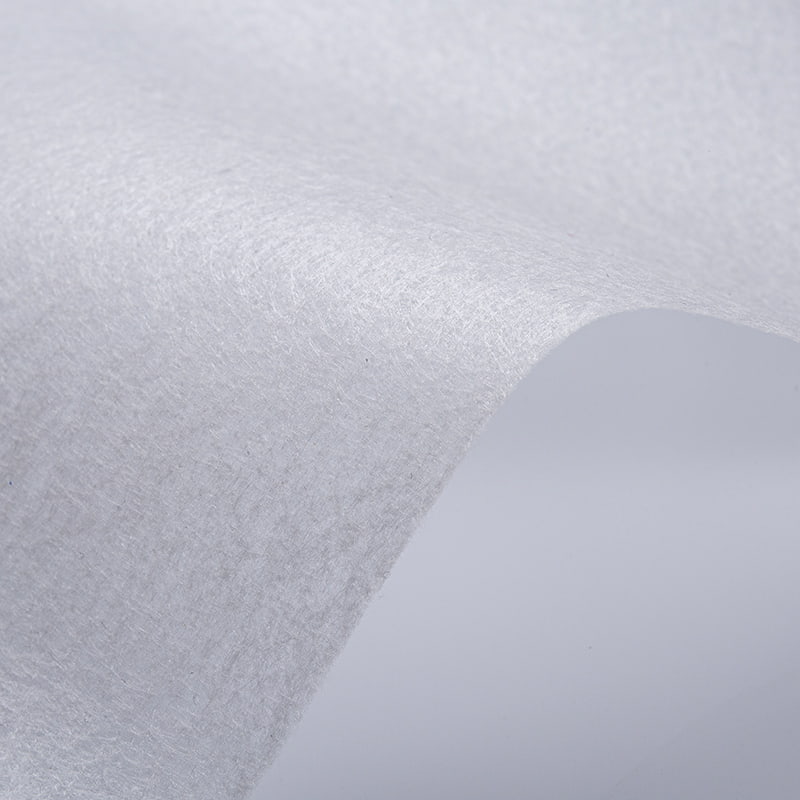
 Hypoallergenic Tough Needle-Punched Nonwoven Mattress UnderlayProduct information Sleep soundly with our hypoallergenic tough nonwoven mattress underlay, made from durable needle-punched nonwoven fabrics. Designed to resist aller...View Product →
Agricultural and Landscape Applications
Outdoor use is the most forgiving outlet of all, and often the most valuable one for mixed-shade recycled fiber. Weed control fabric, frost protection sheets and drainage underlays are buried, covered with soil or exposed to weather, so slight color variation is irrelevant and mechanical durability is everything.
Because these products are heavy and sold by area rather than by performance grade, recycled content can reach very high levels without changing how the fabric behaves in the field. For growers and landscaping contractors, that usually translates into a lower price per roll and a defensible sustainability line in a tender document.
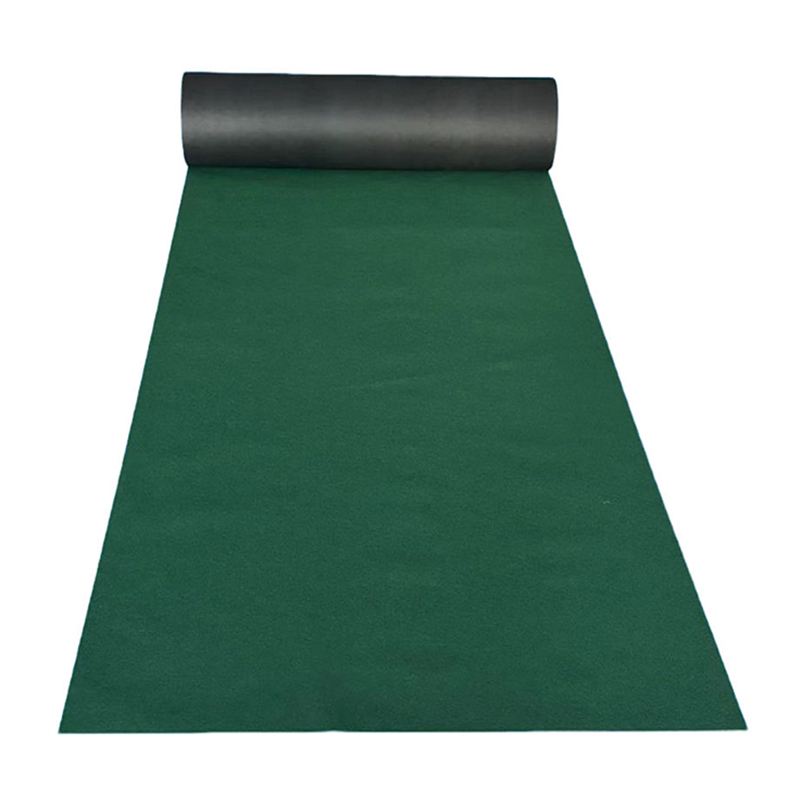 Grass Proof Cloth Non-Woven FabricProduct information Long term use of large-area coverage to protect home non-woven fabric, used for anti grass cloth.View Product →
The Bottleneck Is Collection, Not Conversion
Here is the honest part of the conversation. The technology to turn recovered hygiene fiber into nonwoven fabric already exists. What limits diaper recycling today is the volume and quality of the material that reaches a recovery plant in the first place.
- Collection logistics. Household collection is expensive, so most successful programs start with concentrated sources such as care homes, hospitals, childcare centers and closed-loop service routes.
- Contamination. Wipes, packaging film and food waste that arrive in the same bin raise sorting costs and reduce the yield of usable fiber.
- Regulatory pressure. Landfill restrictions, single-use plastic rules and extended producer responsibility schemes are steadily pushing brands toward recycled content targets.
- Economics. Recovered staple fiber competes directly with virgin polyester pricing, so programs generally need policy support or a brand willing to pay a premium for verified recycled content.
None of these are permanent obstacles. Each of them improves with scale, which is precisely why the nonwoven industry has an interest in supporting collection infrastructure rather than waiting for it to mature on its own.
What Buyers Should Verify Before Specifying Recycled Content
When a specification moves from concept to purchase order, these are the points that decide whether the project succeeds:
- Certification and traceability. A recognized recycled content standard with chain-of-custody documentation is what turns a claim into evidence.
- Consistency data. Ask for gsm tolerance, thickness range, tensile and elongation figures across several production batches, not a single lab sample.
- Hygiene and odor statements. Even for industrial end uses, buyers want confirmation of how the input was disinfected and how the finished roll was stored.
- Color agreement. Mixed recycled fiber shifts shade between lots, so agree on a target range or specify an over-dyed or printed finish.
- Volume commitment. Recycled-content lines run best in long campaigns, so lead times are easier to guarantee against a rolling forecast.
We manufacture under GRS and OEKO-TEX certified systems, which means recycled content can be documented from incoming fiber through to the finished roll rather than asserted on a data sheet.
A Realistic Role for Recycled Fiber in Nonwovens
Diaper recycling will not replace the virgin fiber supply chain, and it does not need to. The realistic path is a steady transfer of recovered polymer into the hidden, industrial layers of products: insulation, padding, underlays, landscape fabric and filtration media, where performance is measured in grams, millimeters and years of service rather than in appearance.
That is a role our industry is well equipped to fill. As a needle-punched nonwoven manufacturer with certified recycled-content capability across furniture, agricultural, filtration and industrial product families, we work with converters, brands and material recovery partners to turn recovered fiber into fabric that performs. If you are evaluating a recycled-content specification, send us your target weight, thickness and application, and we will tell you honestly what the fiber can and cannot do.

 Tel: +86 15700112297
 WhatApp: +86 15700112297
 E-mail:
 Yinziqiao Village, Shicong Town, Nanxun District, Huzhou City, Zhejiang Province, China