English
 中文简体
Content
- 1 Why Needle-Punched Non Woven Fabric Suits Medical Textiles
- 2 The Main Medical Applications at a Glance
- 3 Bandages, Wraps and Cast Padding
- 4 Wound Contact Layers and Composite Dressings
- 5 Packaging and Sterile Barrier Webs
- 6 What Belongs on the Specification Sheet
- 7 Certification, Quality Control and Delivery
- 8 Choosing a Partner for Medical-Grade Needle Punch
Non woven fabric in medical textiles rarely gets noticed by the patient, and that is exactly the point. A needle-punched web holds a dressing against a wound, cushions a limb under plaster, carries the filter in a mask, and wraps a sterile tray before it ever reaches the operating theatre. What matters to the converter and to the procurement team is whether the material behaves predictably roll after roll: it has to run cleanly on the machine, hit the values printed on the drawing, and survive the chosen sterilization route without surprises.
We have built our production around exactly this kind of work. The notes below walk through where needle-punched fabric fits in medical textiles, what each application actually demands, and how to write a specification that keeps production, quality and purchasing teams pulling in the same direction.
Why Needle-Punched Non Woven Fabric Suits Medical Textiles
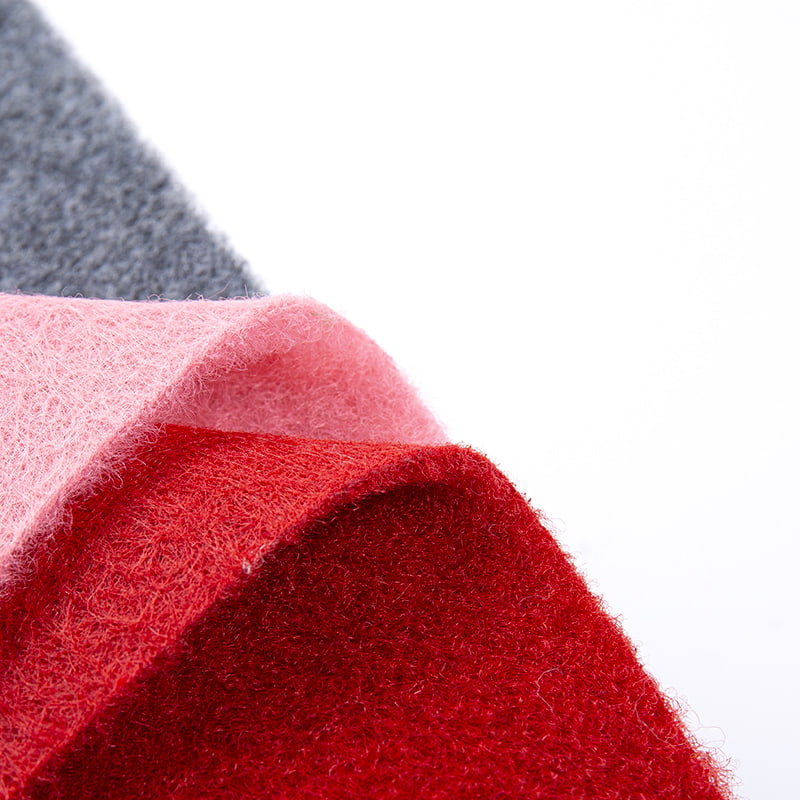
Needle punching builds a fabric by driving barbed needles through a fibre batt, dragging filaments into a three-dimensional tangle. Nothing is glued together in the process. For medical products, that mechanical bond brings several practical advantages.
- Fewer chemical variables. Because the web is held together by fibre friction and entanglement rather than a resin binder, there is simply less to explain when a customer's regulatory file asks what goes into the material.
- Tunable structure. Needle density, punch depth, fibre denier and batt layering all shift basis weight, thickness, pore size and softness, so one production line can serve bandages, padding and barrier webs.
- Mechanical durability at low weight. A well-set needle-punched web resists tearing and abrasion even in thin grades, which matters once narrow strips are slit and rewound under tension.
- Good drape and skin feel. Softer polyester and viscose blends give a wrap the flexibility it needs without the board-like stiffness of a heavily bonded material.
- Convertibility. The fabric can be laminated, coated, perforated, quilted or printed alongside the converting steps many medical products require.
It is worth remembering that "medical nonwoven" is not a single material. A wound contact layer, a surgical gown and a packaging web may all be needle-punched, yet their fibre choice, weight and finishing differ enormously. If you are still comparing constructions, our note on the differences in the uses of different types of nonwoven fabrics is a useful orientation before you commit to a sample.
The Main Medical Applications at a Glance
The table below summarises where needle-punched material usually lands in a medical bill of materials, and which properties buyers tend to argue over during approval.
| Application | Typical role of the needle-punched web | Properties buyers focus on |
|---|---|---|
| Bandages and compression wraps | Soft, breathable base web, sometimes laminated | Elongation, skin feel, clean slit edges |
| Cast padding and orthopaedic underlay | Cushioning loft with controlled density | Thickness, fibre retention, comfort under plaster |
| Wound contact layers and dressings | Absorbent core or wicking carrier in a composite | Moisture handling, wet strength, bond integrity |
| Masks and respirators | Breathable support layer or filter carrier | Airflow resistance, shape stability, run-to-run consistency |
| Surgical gowns and drapes | Skin-friendly base fabric, often laminated | Liquid penetration resistance, drape, lint level |
| Medical packaging | Tear-resistant barrier web for trays and pouches | Seal strength, controlled tear, sterility maintenance |
Reading down the right-hand column, a pattern appears: almost every requirement is a balance rather than a maximum. Stronger is not always better, and softer is not always safer.
Bandages, Wraps and Cast Padding
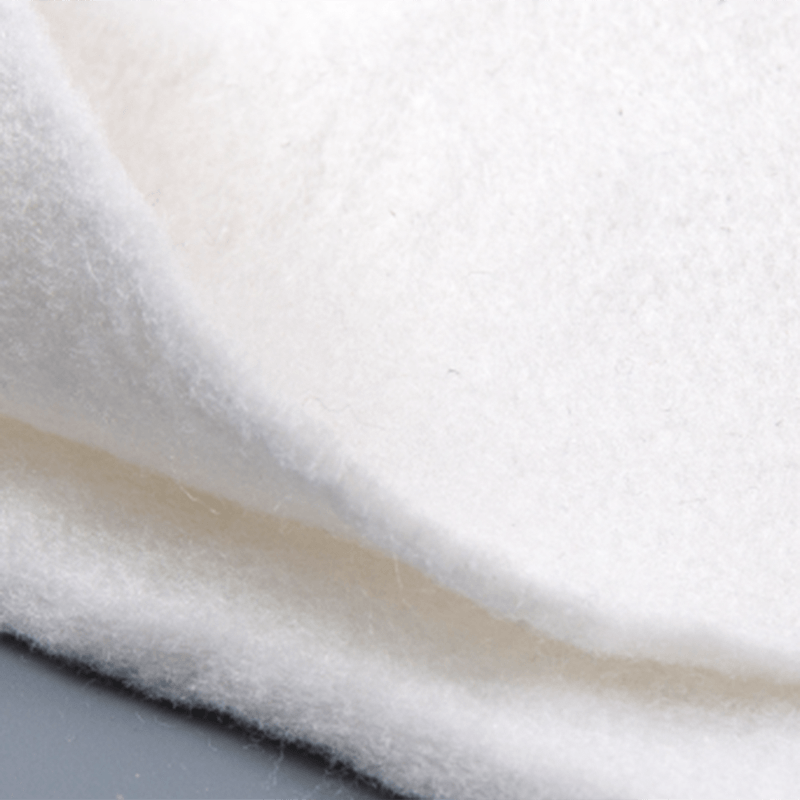
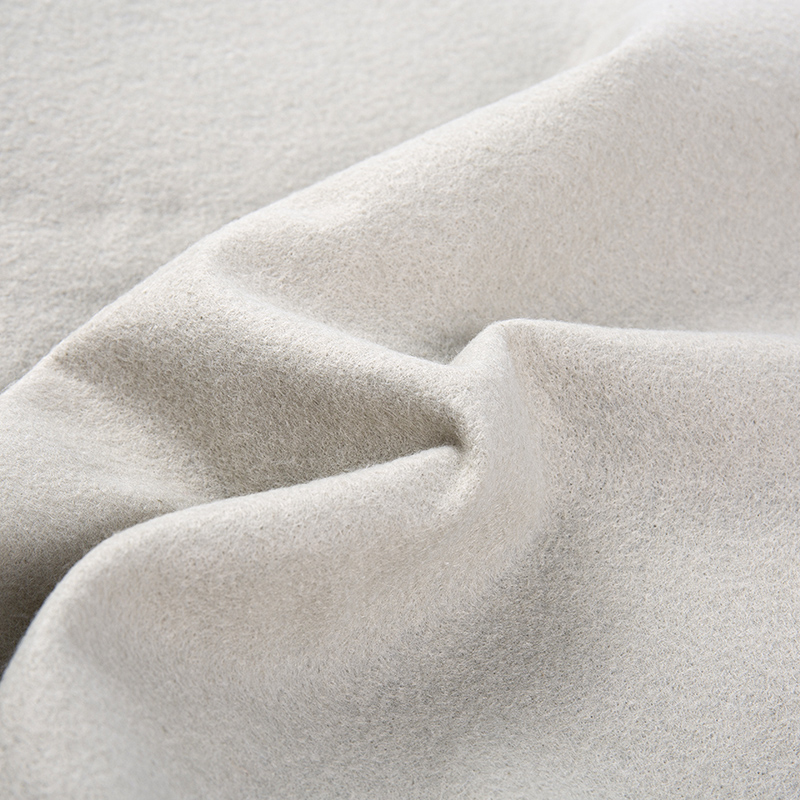
A breathable bandage web is a study in contradictions. It needs enough tensile strength to survive slitting, spooling and unwinding under tension, yet it has to stay soft and conformable once wrapped around a joint. It should let air and moisture vapour pass without shedding loose fibre onto a wound bed. Needle punching handles this balance well: a moderate punch density gives strength in the machine direction, while a lighter, loftier batt keeps the hand soft.
For a breathable bandage roll we usually start from a polyester or polyester-viscose blend, then adjust punch density and calliper until elongation and air permeability land inside the converter's window. Whiteness, roll diameter and splice frequency normally get specified alongside the mechanical values, because they decide how much material is lost at the head of each run.
 Breathable Bandage Needle-Punched Nonwoven MaterialExplore this medical needle-punched nonwoven for breathable bandage use, where material behavior and roll consistency are key evaluation points.View Product →
Cast padding follows similar logic but leans on loft. The underlay must cushion a limb without migrating or clumping when the plaster is applied, so fibre length, batt layering and surface stabilisation matter more than raw tensile numbers.
Wound Contact Layers and Composite Dressings
This is where nonwoven engineering gets subtle. A dressing has to move exudate away from the wound bed, stay mechanically stable when wet, and release cleanly at dressing change. Many converters therefore build a composite: an absorbent needle-punched core, a wicking layer, and sometimes a perforated film on the contact side.
Because we control the web from fibre opening through to needling, pore structure and capillary behaviour can be adjusted at the source rather than patched with a coating afterwards. That said, if the design calls for a composite, the bonding method between layers is as critical as the fabric itself — delamination in a wet dressing is a far worse failure than a slightly lower absorbency figure.
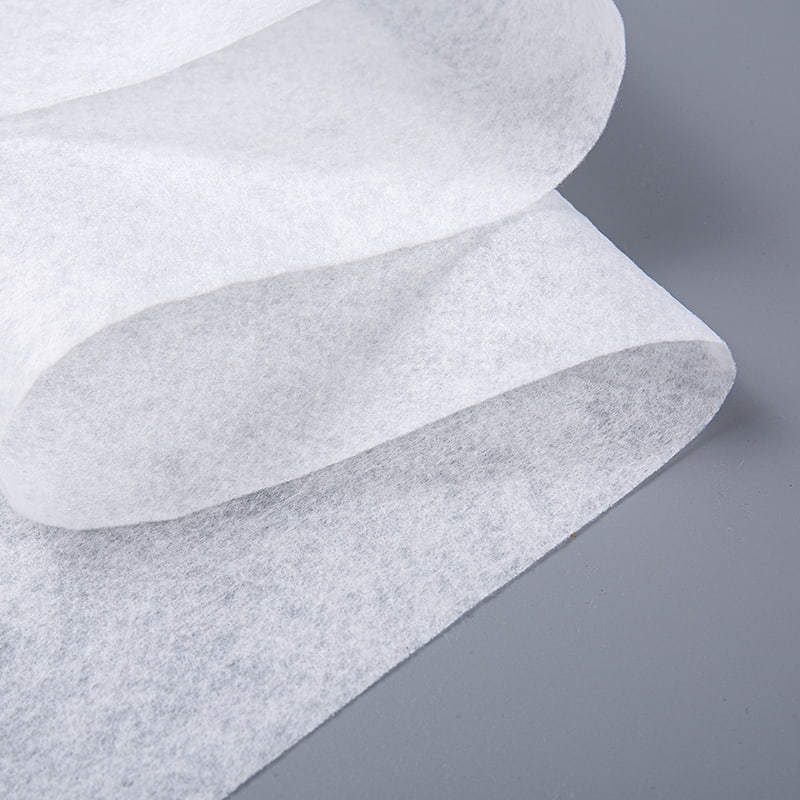 Moisture-Wicking Wound Dressing Needle-Punched Nonwoven CompositeConsider this medical nonwoven composite for moisture-wicking wound dressings, especially when layer bonding and sample sterilization routes need early evaluation.View Product →
When you send samples for evaluation, include the intended sterilization route. Ethylene oxide and gamma treatment affect some fibre blends differently, and it is cheaper to learn that at the sampling stage than during a validation run.
Packaging and Sterile Barrier Webs
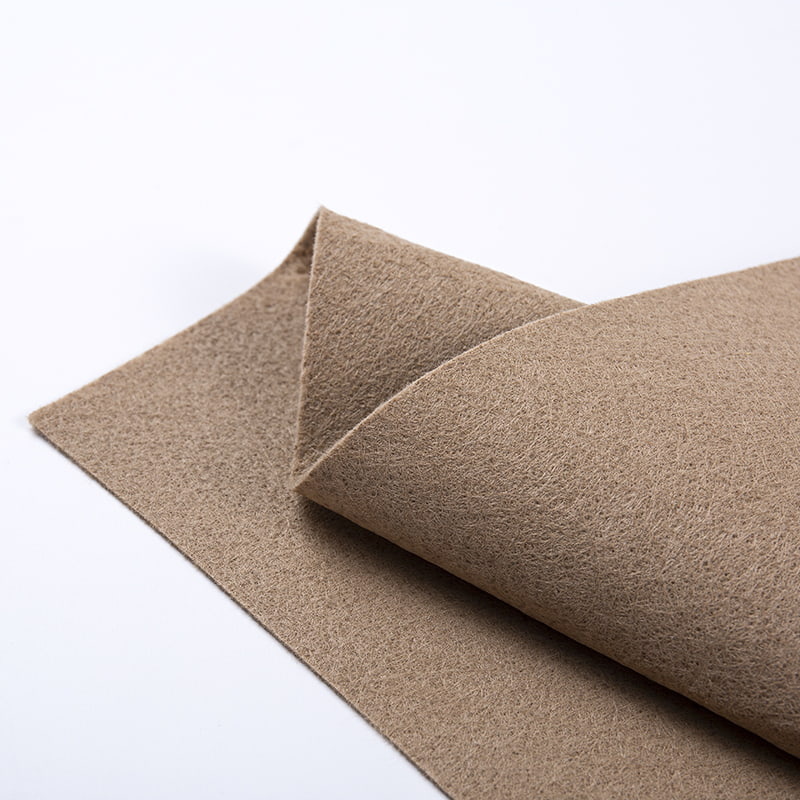
Sterile packaging is an underrated application. A barrier web has to hold a seal, resist puncture from a tray corner, tear along a controlled line when a nurse opens it, and keep sterility intact until that exact moment. Needle-punched polyester offers predictable tear propagation and good dimensional stability through gamma or ethylene oxide processing, and the fibre mix can be tuned if a converter needs a cleaner peel.
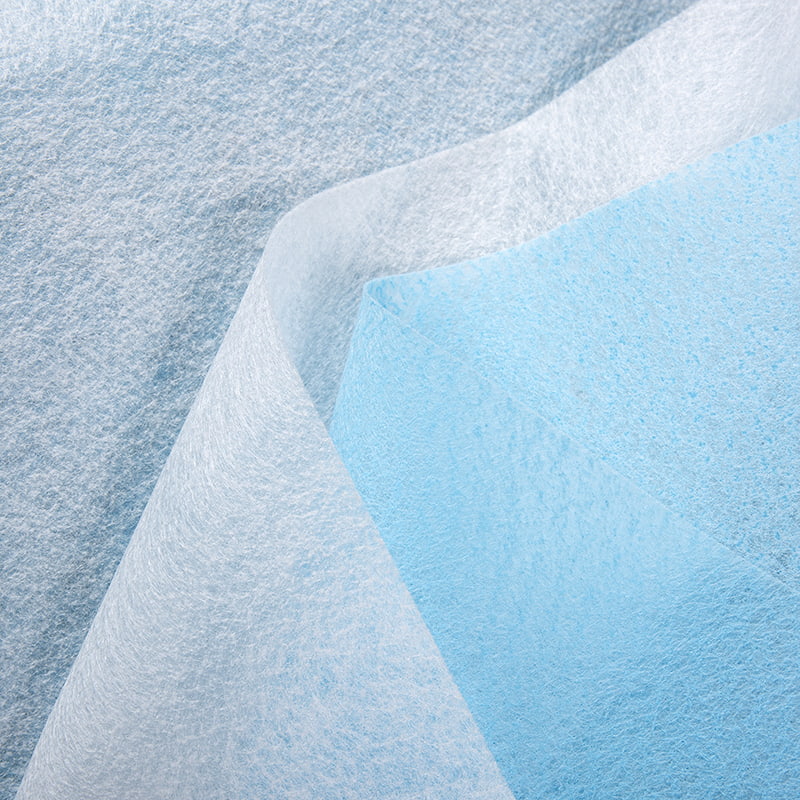 Tear-Resistant Medical Packaging Barrier Needle-Punched Nonwoven MaterialReview this needle-punched nonwoven for medical packaging barriers, where controlled tear and sterilization compatibility are practical evaluation points.View Product →
Where the same web doubles as a wrap or protective cover, a light coating or laminated film can be added — but every extra layer should be tested against the chosen sterilization method before the design is frozen.
What Belongs on the Specification Sheet
Most delays we see are not manufacturing problems; they are specification gaps. A sheet that covers the following points usually shortens sampling from weeks to days.
- Fibre type and blend, including any recycled content requirement.
- Basis weight in gsm and thickness in millimetres, with tolerances.
- Tensile strength and elongation, in both machine and cross direction.
- Air permeability or pore size where breathability is a functional claim.
- Absorbency and wicking rate for anything that will contact exudate.
- Surface finish: calendered, embossed, perforated, or left lofted.
- Roll width, core diameter, roll diameter and splice policy.
- Colour and whiteness targets, checked under the lighting your customer uses.
- Sterilization compatibility: ethylene oxide, gamma, or none at all.
- Documentation: certification records, test reports and material declarations.
Two of those items deserve a second look. Splice policy quietly drives yield on high-speed lines, and whiteness targets cause more rejections than most mechanical properties ever do.
Certification, Quality Control and Delivery
Two credentials come up in nearly every medical conversation. GRS covers recycled content and the chain of custody behind it, while OEKO-TEX® addresses harmful substances and textile safety. Both are held for our needle-punched range, and both are worth confirming early, because a certification gap discovered during sampling can cost a full development cycle.
Quality control runs through the process rather than sitting at the end of it: fibre intake, batt weight, needle board condition and final roll inspection all get checked before material is released. Our plant in Nanxun, Huzhou, sits within easy reach of Shanghai port, which keeps export replenishment cycles short for overseas converters. With roughly 80,000 square metres of production space and a team of more than 200 people, we can support both pilot quantities and repeat orders without changing the people who handle your account.
Choosing a Partner for Medical-Grade Needle Punch
If you are developing a medical product and are not yet certain whether needle-punched fabric is the right base, the fastest route is usually a short conversation about the end use followed by samples. Tell us the application, the converting process and the sterilization route, and we will suggest a starting specification instead of asking you to guess from a catalogue.
You can browse our medical needle-punched nonwoven range to see the standard constructions, or send a drawing with target values and let our team work backwards from there. Non woven fabric in medical textiles rewards that kind of early collaboration: the material is genuinely adaptable, but only when the specification is written with both the converting line and the patient in mind.
 Tel: +86 15700112297
 WhatApp: +86 15700112297
 E-mail:
 Yinziqiao Village, Shicong Town, Nanxun District, Huzhou City, Zhejiang Province, China